


 12 minuti di lettura
 Ultimo aggiornamento: 27 Ott 2026


The best business bank account for ecommerce depends on two things before anything else: where your business is registered, and which currencies your money moves in. A US seller with American customers needs something very different from an EU-based brand selling across the euro zone, or a store sourcing from Asia and selling in three currencies.
Most of the accounts in this guide are US-based, with deposits protected by FDIC insurance through partner banks. They’re the right starting point for a US LLC selling mainly to US customers, and most offer free or low-cost plans. We also cover international and multi-currency options separately, for sellers based outside the US or for US sellers who need proper banking in Europe.
At ConnectPay, we work with ecommerce businesses that need pagamenti nell'area dell'euro, so we’ve been clear below about where we fit and where we don’t. Fees, rates and features change often, so treat the figures here as accurate at the time of writing and confirm them with each provider before you open an account.
Best Business Bank Accounts for Ecommerce: Quick Overview
Here’s our pick for each type of ecommerce seller:
- Best for EU-based sellers and euro-zone banking: ConnectPay
- Best for US venture-backed startups: Mercurio
- Best for yield on cash balances: Bluevine
- Best for in-person and cash banking: Chase
- Best for global, cross-border ecommerce: Airwallex
- Best for holding many currencies in one account: Revolut Business
- Best for simple, free small-business banking: Novo
- Best for low-cost international transfers: Wise Business
8 Best Business Bank Accounts for Ecommerce
1. ConnectPay
Ideale per: EU-based ecommerce sellers or businesses needing euro-zone banking, multi-currency IBANs and embedded compliance.

Let’s start with what we’re not. ConnectPay isn’t a US bank and isn’t FDIC-insured. If you’re a US LLC that needs domestic branch banking, ACH, check deposits and a local banker, the US options below will serve you better.
Where we fit is euro-zone banking. If your ecommerce business is registered in the EU, or you’re a US seller paying European suppliers and collecting from European customers, you need real European infrastructure. That means an IBAN, SEPA transfers and accounts in the currencies you trade in. For that, we’re a strong candidate for the best business bank account for ecommerce in Europe.
ConnectPay is an EMI licensed in Lithuania. We offer multi-currency conti aziendali with IBANs, SEPA and SWIFT connectivity, card issuing and built-in AML and KYC checks. Everything is available through an API, so larger stores and platforms can connect payments, payouts and reconciliation directly to their systems.
On protection, the model is different from US banks. Client funds are safeguarded in segregated accounts, kept separate from our own operating money. That’s not deposit insurance, but it serves the same underlying goal: keeping customer money out of reach of the company’s own business risk.
For a European bank account for an ecommerce business, or a euro-zone account alongside your US one, that’s the gap we fill. It’s why we see ourselves among the best banks for ecommerce businesses selling in Europe.
2. Mercury
Ideale per: US venture-backed startups wanting a polished interface and high-limit deposit protection.

Mercury is the account many US startups open first, and it’s a strong candidate for the best business bank account for fast-growing ecommerce brands, especially those raising venture funding.
It charges $0 in monthly fees and no fees on standard transactions. Through its partner bank sweep network, it offers FDIC insurance of up to $5 million, well above the standard $250,000. That matters for brands holding large cash balances after a funding round.
Mercury is a fintech, not a bank, and today its banking services run through partner banks. That’s changing. In April 2026, Mercury received conditional approval from the OCC to establish Mercury Bank, N.A. Final authorization is still pending, including approvals from the FDIC and the Federal Reserve, so for now the partner-bank model remains in place.
For ecommerce finance teams, Mercury integrates with QuickBooks, Xero and NetSuite, and its interface is widely regarded as one of the cleanest in business banking. It also offers virtual and physical cards, sub-accounts for separating ad spend or tax reserves, and API access for teams that want to automate payments. Its international features are more limited, so cross-border sellers often pair it with a multi-currency provider.
3. Bluevine
Ideale per: US sellers wanting yield on cash balances alongside straightforward business checking.

If your store keeps a healthy cash cushion, Bluevine is worth a look as the best business bank account for online businesses that want their balance to earn something.
At the time of writing, Bluevine offers three tiers:
- Standard: free, earning 1.3% APY on balances up to $250,000 if you meet a monthly activity requirement
- Plus: $30 a month, waivable, earning 1.75% APY on balances up to $250,000
- Premier: $95 a month, waivable, earning 3.0% APY
The waivers depend on keeping a minimum average balance and spending a set amount on Bluevine cards each month.
Deposits are FDIC-insured up to $3 million through Bluevine’s partner bank and a sweep program across other banks. You also get unlimited transactions and built-in invoicing tools, which are handy for wholesale or B2B orders alongside your online store. Bluevine is US-only and focused on dollar banking, so it’s less useful if you sell or source heavily abroad. Rates on all three tiers change regularly, so check the current figures before you rely on the yield in your planning.
4. Chase
Ideale per: Established ecommerce businesses that handle physical cash or want a dedicated in-person banker.
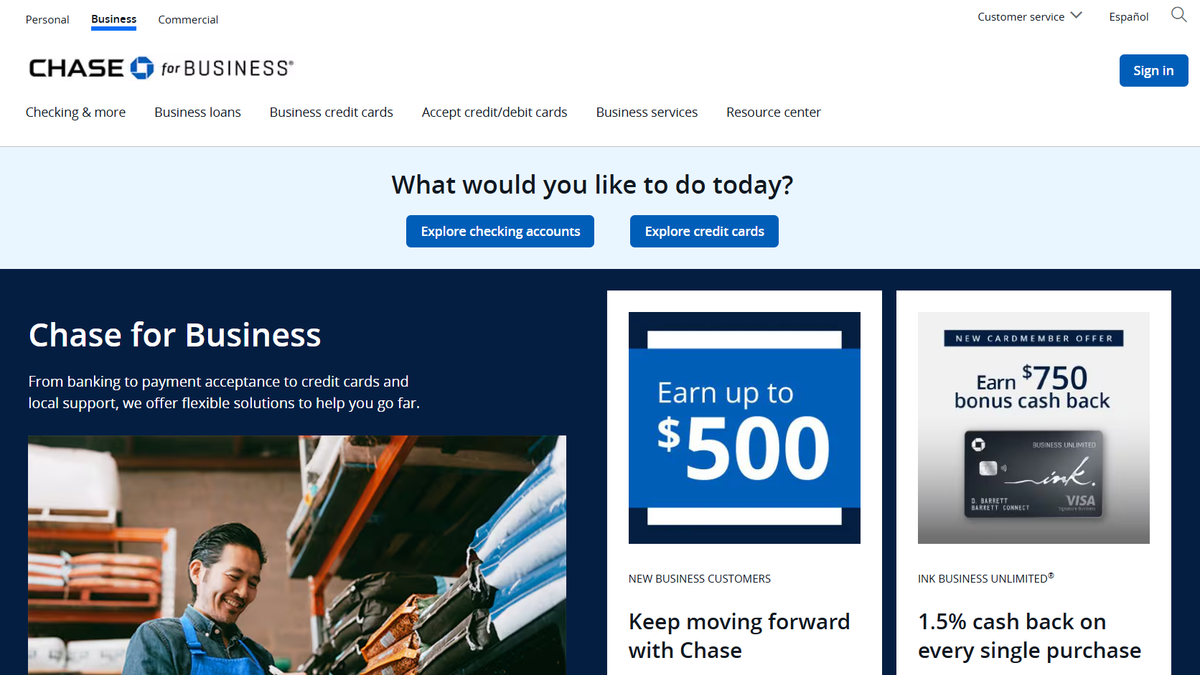
Chase is the traditional option on this list, and for some businesses that’s exactly the point. It has more than 5,000 branches and around 15,000 ATMs, giving it one of the largest physical networks of any US bank.
That’s useful if your ecommerce business also runs pop-up shops, markets or a physical store, and needs to deposit cash regularly. It also suits owners who want a relationship banker and easy access to loans and credit lines as the business grows.
Chase Business Complete Banking costs $15 a month, which you can waive by meeting balance or activity requirements.
The trade-off is international flexibility. As a bank account for ecommerce businesses selling across borders, Chase is less competitive than fintechs. Wire fees and FX margins can add up quickly for high-volume international sellers. Many established brands solve this by keeping Chase for reserves and cash, and using a fintech account for overseas payments.
5. Airwallex
Ideale per: Global, cross-border ecommerce sellers wanting low FX costs and broad currency support.
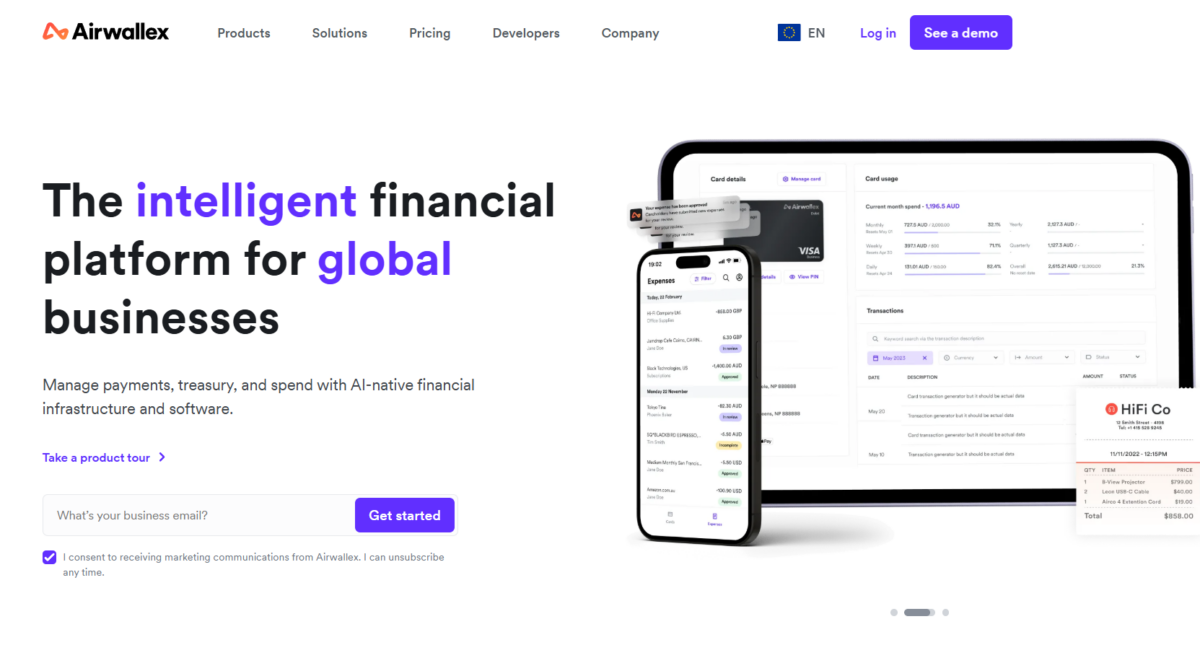
If you sell in several countries, source from overseas suppliers or run multiple marketplace storefronts, Airwallex is one of the best banks for ecommerce businesses with a global footprint, even though it’s technically a fintech rather than a bank.
Airwallex supports 20+ currencies with local account details, so you can receive marketplace payouts and customer payments like a local business in each market. It offers free transfers through local payment rails to more than 100 countries, and it says its FX rates can save businesses up to 80% compared with typical bank markups.
There’s no monthly fee on its basic plan, which keeps costs low while you test new markets. Paid plans add more users, higher limits and extra features. Airwallex also offers card issuing, expense management and APIs, so larger brands can automate supplier payments and reconcile multi-currency payouts directly in their own systems.
Airwallex suits brands selling on Amazon, Shopify and other platforms across several regions at once. If you’re weighing it against other cross-border providers, our guide to Airwallex alternatives covers the options.
6. Revolut Business
Ideale per: Sellers wanting to hold many currencies in a single account.

Revolut Business lets you hold 25+ currencies in one account. For ecommerce sellers with revenue and costs in several currencies, that makes it one of the best bank accounts for online businesses that want to avoid constant conversion.
You can receive payments in one currency, pay suppliers in another and convert only when the rate suits you. Revolut also offers business cards, expense tools and integrations with accounting software and several ecommerce platforms.
Plans are tiered, with monthly fees that rise with features and included transfer allowances. Prices vary by country and change regularly, so compare the plan limits against your actual transaction volumes before choosing. Watch fair-usage limits on currency exchange too, since conversions above a plan’s allowance can carry extra fees.
Like other fintechs on this list, Revolut isn’t a US bank, and how customer funds are protected depends on the country where your account is opened.
Revolut Business is strongest for small and mid-sized online sellers that want a single, app-based place to manage multi-currency money without the complexity of a full treasury setup.
7. Novo
Ideale per: Small ecommerce sellers wanting simple, free small-business banking.
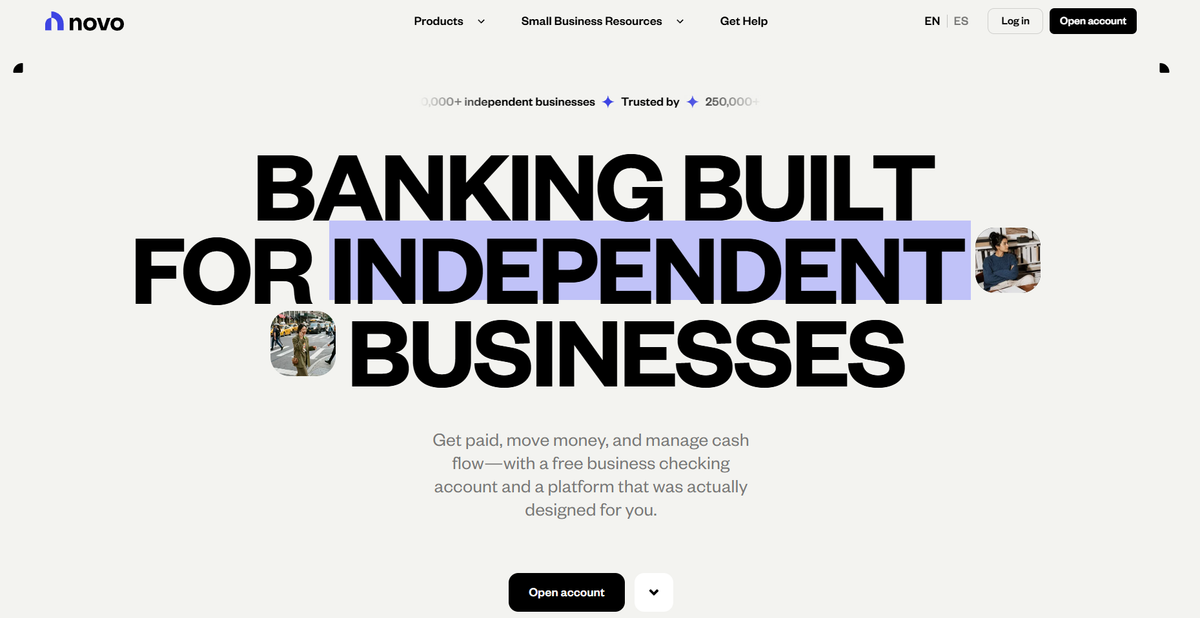
If you’re just getting started, Novo is often cited as the best bank for small ecommerce businesses that want something free and uncomplicated.
It has no monthly fee and no minimum balance, and deposits are FDIC-insured through its partner bank. It also connects with common ecommerce and payment tools, so sales revenue can flow into one place with minimal setup.
Novo works best as a lean option for early-stage US sellers. You won’t find multi-currency accounts or advanced treasury features here. But if you sell mainly in the US and want to keep business money separate from personal finances without paying for it, it covers the essentials well. It also offers features like invoicing and reserves for setting money aside for taxes. Once your store starts selling internationally or holding larger balances, you’ll likely need to add or move to a more capable account.
8. Wise Business
Ideale per: Sellers prioritizing low-cost international transfers over a full banking feature set.

If you’re asking what is the best online business bank account for paying suppliers abroad cheaply, Wise Business belongs on the shortlist.
Wise is known for transparent pricing and conversion at the mid-market exchange rate, plus a small, clearly shown fee. You can hold and convert many currencies and get local account details in several major ones to receive payments.
It suits freelancers, small studios and smaller international sellers whose main need is cheap cross-border payments. It lacks the treasury tools, credit and deeper integrations of larger platforms, so growing brands often pair it with a fuller business account. There’s no monthly fee, though a one-time setup fee applies in some countries. Wise also offers business debit cards and batch payments, which help when you pay many overseas suppliers or freelancers at once.

Sei pronto a potenziare la tua infrastruttura di pagamento?
Smettila di fare i conti con flussi di pagamento frammentati. Accedi a IBAN dedicati, SEPA Instant e integrazioni API senza soluzione di continuità, il tutto da un’unica piattaforma unificata.
Best Business Bank Accounts for Ecommerce: Comparison
| Fornitore | Ideale per | Monthly Fee | Deposit Protection | Supporto multivaluta |
|---|---|---|---|---|
| ConnectPay | EU sellers, euro-zone banking | Custom pricing | Safeguarded (EU) | Yes, multi-currency IBANs |
| Mercurio | US venture-backed startups | $0 | FDIC up to $5M via sweep | Limitato |
| Bluevine | Yield on balances | $0–$95 (waivable) | FDIC up to $3M via sweep | Limitato |
| Chase | Cash and in-person banking | $15 (waivable) | FDIC up to $250K | Limitato |
| Airwallex | Cross-border sellers | From $0 | Varies by region | Yes, 20+ currencies |
| Revolut Business | Holding many currencies | Varies by plan | Varies by region | Yes, 25+ currencies |
| Novo | Simple, free banking | $0 | FDIC via partner bank | No |
| Wise Business | Trasferimenti a basso costo | $0 (setup fee in some regions) | Varies by region | Sì |
What to Look for in an Ecommerce Business Bank Account
Whatever business bank account you choose, five factors matter most for an online store.
- Monthly fees come first. Ecommerce-focused accounts commonly cost between $10 and $50 a month, though several good options are free. Check what triggers extra charges, such as wires, cash deposits or international transfers.
- Multi-currency support matters as soon as you sell or source abroad. Without it, every foreign payment is converted automatically, often at a poor rate.
- Integrations save hours every week. Look for connections to Shopify and your other sales channels, and to accounting software like QuickBooks, Xero or NetSuite, so transactions reconcile without manual entry.
- Settlement speed affects cash flow. Check how quickly payouts from your payment processor and marketplaces reach your account, and how fast you can pay suppliers.
- Deposit protection varies by region. In the US, look for FDIC insurance. In the EU, banks are covered by deposit guarantee schemes, while EMIs safeguard client funds instead.
In general, fintechs beat traditional banks on fees and international payment speed. Traditional banks like Chase still lead on physical branch access. If you’re also choosing how to accept payments, see our guide to elaborazione dei pagamenti nell'e-commerce.
Fintech vs. Traditional Banks for Ecommerce
This is the decision behind most of the comparison above.
Fintech business accounts, such as Mercury, Bluevine, Airwallex, Revolut, Novo, Wise and ConnectPay, usually offer lower fees, faster international payments and better integrations with ecommerce platforms and accounting tools. Accounts open online, often in a day or two.
Banche tradizionali usually require minimum balances or charge monthly fees. In return, they offer physical branches, cash handling and established lending relationships, which can matter when you need a credit line for inventory.
It doesn’t have to be one or the other. Many ecommerce businesses use a traditional bank for reserves, lending and cash deposits, alongside a fintech business account for day-to-day operations, supplier payments and international sales. That combination often gives you the best of both. The main cost is a little extra admin, such as moving money between accounts and reconciling two sets of statements. For most growing stores, the savings on fees and FX more than cover it.
For a wider comparison of checking options, see our roundup of the i migliori conti correnti aziendali.
Match Your Business Account to Where You Actually Sell
Fee tables make business accounts look easy to compare, but the most important factor is geography. Where your company is registered, where your customers pay from and where your suppliers are paid should shape your choice more than a few dollars of monthly fees.
For a US seller focused on American customers, a US account with strong FDIC coverage and good integrations is usually the right base.
But US sellers expanding into Europe, and EU-based sellers from day one, need euro-zone banking infrastructure that a US-only account can’t provide: a European IBAN, SEPA payments and accounts in the currencies they trade in. Running a European business entirely from a US account usually means slow international wires, conversion fees on every sale and problems with suppliers who expect SEPA payments.
So map where your money actually comes from and goes before you compare fees. If Europe is part of that picture, talk to ConnectPay about euro-zone accounts for your ecommerce business.


