













 16 minuti di lettura
  Ultimo aggiornamento: 10 Ago 2026
  Verificato


Il miglior fornitore di IBAN virtuali per te è quello le cui licenze e copertura sono in linea con la tua attività, non quello con la dashboard più accattivante. Hai bisogno di conti solo per te stesso o devi emettere IBAN ai tuoi clienti su larga scala? Rispondi prima a questa domanda e l’elenco dei candidati si ridurrà rapidamente. In base alla nostra esperienza con piattaforme e fintech, quella singola domanda determina in gran parte l’esito della scelta.
Un IBAN virtuale consente di incassare e riconciliare i pagamenti in diverse valute senza dover aprire un conto bancario separato per ogni mercato o cliente. Per le fintech, i marketplace e le aziende in fase di espansione, ciò si traduce in un incasso più rapido e in una riconciliazione molto più accurata.
Questa guida mette a confronto nove dei principali fornitori di IBAN virtuali. Vengo a esaminare gli aspetti relativi alle licenze, al supporto valutario, al livello di conformità, alla riconciliazione e allo sforzo di integrazione. L’adozione continua a crescere: il numero di IBAN virtuali emessi a livello globale aumenta di oltre 30% ogni anno. Poiché i fornitori autorizzati istituti di pagamento Se desiderate ottenere IBAN virtuali da fornitori diversi dalle banche tradizionali, la scelta del fornitore è fondamentale. Ecco i nove che metterei nella mia rosa dei candidati.
Fornitori di IBAN virtuali: panoramica rapida
Hai poco tempo? Ecco le mie scelte migliori per categoria:
- Miglior fornitore di IBAN virtuali in assoluto → ConnectPay
- Ideale per un'integrazione incentrata sugli sviluppatori → Stripe Treasury
- La soluzione ideale per una copertura multivaluta a livello globale → Airwallex
- La scelta migliore per la semplicità delle PMI → Wise Business
- La soluzione ideale per la conformità aziendale → Currencycloud
Di seguito analizzo ciascuna di esse, fornendo informazioni relative alle licenze, alle valute supportate e alla riconciliazione, in modo che possiate scegliere quella più adatta alle vostre esigenze.
I 9 migliori fornitori di IBAN virtuali
1. ConnectPay
Ideale per: Piattaforme, marketplace e aziende fintech che necessitano di IBAN virtuali con licenza EMI, dotati di funzionalità di conformità integrate e di un’infrastruttura multivaluta.

Sarò sincero: questa è la nostra piattaforma. ConnectPay è la soluzione ideale per i team che hanno bisogno di qualcosa di più dei semplici numeri di conto. Vi offriamo un’infrastruttura conforme e scalabile, basata sull’emissione di IBAN virtuali, con uno stack finanziario completo integrato per ogni conto.
Siamo titolari di una licenza EMI, quindi potrai contare su copertura normativa e credibilità fin dal primo giorno. Emettiamo IBAN virtuali multivaluta in oltre 80 valute e apriamo IBAN dedicati sia per i clienti aziendali che per quelli privati. La connettività SEPA e SWIFT gestisce i pagamenti locali e internazionali tramite un’unica configurazione.
È proprio nella riconciliazione che i team notano la differenza. Assegniamo un IBAN univoco per cliente o per fattura, in modo che il sistema abbini automaticamente i pagamenti in entrata. Prendiamo ad esempio un marketplace che riscuote da 2.000 acquirenti: ciascuno effettua il pagamento sul proprio IBAN e i fondi vengono riconciliati senza che il team finanziario debba cercare i riferimenti. Integriamo le funzionalità AML e KYC nella piattaforma, e il monitoraggio in tempo reale ti offre una visione completa di ogni pagamento.
Il nostro approccio "API-first" ti consente di generare IBAN virtuali in modo programmatico e su larga scala. Si tratta di un'infrastruttura collaudata: abbiamo trasferito oltre 15.000 utenti su conti con IBAN individuali e abbiamo automatizzato il processo di onboarding 90%, che ora si conclude in pochi secondi.
Andiamo oltre l’emissione di base, adatta a piattaforme fintech, marketplace, piattaforme di prestiti e neobanche. Scopri la nostra conti aziendali e come noi creare IBAN virtuali su misura per le piattaforme sui mercati globali.
2. Airwallex
Ideale per: Aziende del settore digitale che necessitano di conti virtuali multivaluta con tassi di cambio competitivi e copertura globale.
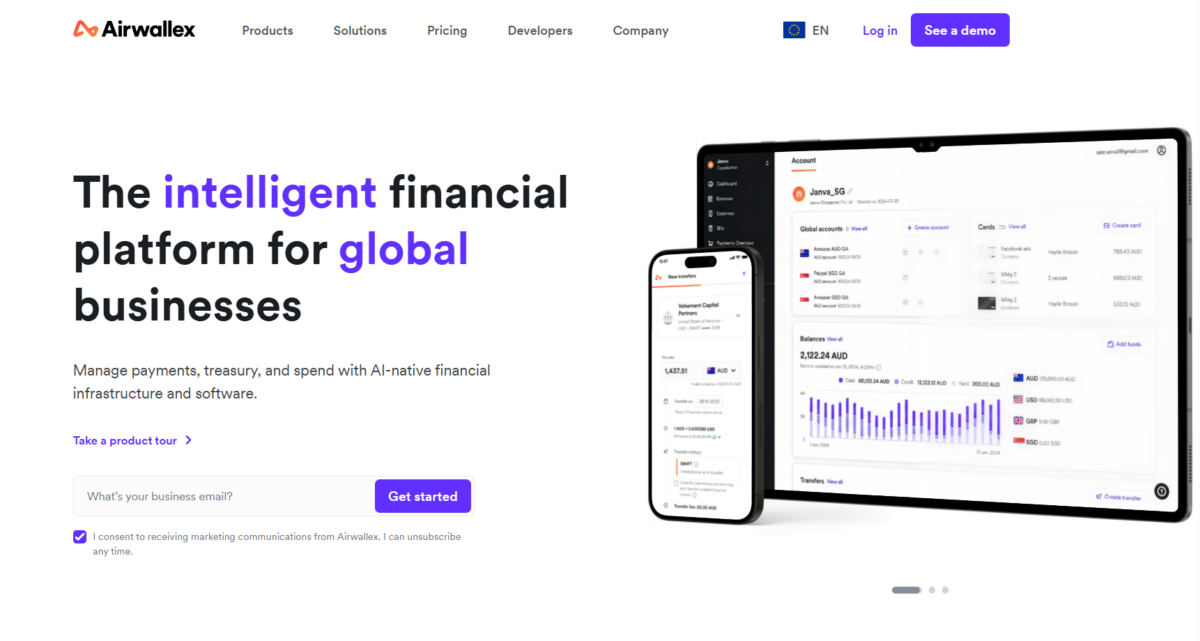
Airwallex è una scelta eccellente tra i migliori fornitori di conti IBAN virtuali per le aziende che incassano pagamenti in tutto il mondo. Si basa su un'infrastruttura di portafoglio multivaluta, che consente di detenere, ricevere e gestire fondi in diverse valute da un'unica piattaforma.
I tassi di cambio competitivi rappresentano il principale punto di forza. Quando si effettuano frequenti trasferimenti di denaro tra valute diverse, il risparmio sulla conversione supera di gran lunga quello offerto dalle banche tradizionali. Prendiamo ad esempio un venditore e-commerce che riceve pagamenti in euro, dollari e sterline: può incassare in ciascuna di queste valute e poi convertirle secondo le proprie condizioni, anziché perdere margine su ogni vendita. È proprio questo il motivo per cui le aziende digitali globali lo scelgono.
La sua copertura normativa continua ad ampliarsi in tutti i mercati e l’azienda si è espansa costantemente in nuove regioni. L’architettura “API-first” consente agli sviluppatori di integrare conti virtuali e flussi di pagamento direttamente nei propri prodotti, senza dover ricorrere a una dashboard manuale.
C'è un aspetto da valutare con attenzione. La competenza normativa di Airwallex in Europa è inferiore rispetto a quella dei fornitori specializzati in possesso di licenza EMI. Se la conformità normativa in Europa è la vostra priorità, confrontate prima questa soluzione con le opzioni che dispongono di licenza EMI.
Per le aziende che danno priorità all'efficienza nel cambio valuta e alla copertura globale, Airwallex è una soluzione valida e ampiamente utilizzata. Se invece la conformità normativa europea è la vostra priorità assoluta, vi consigliamo di valutare attentamente la situazione prima di impegnarvi.
3. Wise Business
Ideale per: Piccole e medie imprese e liberi professionisti che necessitano di conti virtuali multivaluta semplici con commissioni trasparenti.

Wise Business è un fornitore di IBAN virtuali a prezzi accessibili rivolto alle piccole imprese, ai liberi professionisti e ai privati. La sua reputazione si basa sulla trasparenza, sia nei prezzi che nell'esperienza offerta.
Il titolo recita: “Tariffe di cambio trasparenti”. Wise mostra il tasso di cambio reale e indica chiaramente le commissioni fin dall’inizio, evitando così i margini nascosti che le banche applicano alle conversioni. Le piccole imprese attente ai costi apprezzano questa prevedibilità. Prendiamo ad esempio un libero professionista che emette fatture a clienti in tre paesi diversi: può ricevere ogni pagamento nella valuta locale, per poi convertirlo a un tasso che può effettivamente vedere.
La piattaforma ti fornisce i dettagli dei conti locali in diverse valute, così puoi ricevere pagamenti come se avessi un conto locale in ogni mercato. La configurazione è rapida e l'interfaccia è semplice e intuitiva. Ciò la rende adatta agli utenti che non hanno competenze finanziarie o tecniche.
Il punto debole di Wise è la scalabilità e l’utilizzo della piattaforma. È pensato per un’azienda che gestisce i propri conti, non per una piattaforma che deve emettere IBAN virtuali ai propri clienti. Se desideri integrare l’emissione nel tuo prodotto, Wise ti limiterà.
Per le PMI e i liberi professionisti che apprezzano la semplicità, la trasparenza e la facilità d'uso, Wise Business è la soluzione ideale. Per l'emissione su larga scala a livello di infrastruttura, è meglio cercare altrove.
4. Currencycloud
Ideale per: Aziende e istituzioni finanziarie che necessitano di un'infrastruttura IBAN virtuale basata su API e caratterizzata da un elevato livello di conformità.

Currencycloud è tra i principali fornitori di IBAN virtuali per i team che sviluppano i propri prodotti finanziari. Non offre servizi direttamente agli utenti finali, ma fornisce l’infrastruttura che le banche e le grandi fintech integrano nelle loro offerte.
Le sue credenziali normative sono solide, e questo è di enorme importanza per le istituzioni che si affidano ad essa. Le banche e le fintech affermate scelgono Currencycloud proprio perché soddisfa i requisiti di conformità a cui sono soggette. È proprio questa fiducia a contraddistingerla.
La piattaforma è di tipo “API-first”, progettata per integrare nei prodotti funzionalità di pagamento transfrontaliero e di conti virtuali. È possibile creare flussi multivaluta di incasso, conversione e pagamento sulla sua infrastruttura, per poi presentarli con il proprio marchio. Prendiamo ad esempio una neobanca che lancia conti multivaluta: può integrare Currencycloud nella propria app e offrire servizi di incasso in decine di valute senza dover sviluppare autonomamente l’infrastruttura necessaria.
Il compromesso riguarda l’accessibilità. Il processo di onboarding è più complesso rispetto a quello dei fornitori self-service, e i requisiti minimi di volume lo rendono inaccessibile alle piccole imprese e alle startup in fase iniziale. È rivolto alle organizzazioni che gestiscono volumi consistenti.
Per le aziende e le istituzioni che necessitano di un’infrastruttura solida e conforme alle normative per supportare i propri prodotti, Currencycloud rappresenta una scelta collaudata. I team più piccoli dovrebbero invece optare per una soluzione più snella.
5. Stripe Treasury
Ideale per: Piattaforme orientate agli sviluppatori che integrano nei propri prodotti un’infrastruttura di conti virtuali.

Stripe Treasury estende Stripe al settore del "banking-as-a-service", rendendolo una scelta naturale come fornitore di IBAN virtuali per le piattaforme orientate agli sviluppatori. Consente di integrare conti finanziari direttamente nel proprio prodotto, in modo che gli utenti possano detenere saldi ed effettuare trasferimenti di denaro.
L'esperienza degli sviluppatori offerta da Stripe è il suo punto di forza principale. L'ecosistema di SDK e API è molto articolato e ben documentato. I team che già utilizzano Stripe possono integrare Treasury in modo rapido. Prendiamo ad esempio una piattaforma SaaS che desidera fornire un saldo ai propri venditori: può creare conti tramite Treasury senza dover diventare essa stessa una banca.
L'infrastruttura bancaria integrata è destinata alle piattaforme, non alle singole aziende. È ideale per le società di software che desiderano offrire ai propri clienti funzionalità relative ai conti e ai trasferimenti di denaro.
Il limite principale è di natura geografica. Stripe Treasury rimane oggi prevalentemente incentrato sul mercato statunitense, con una disponibilità limitata di IBAN europei. Se l’emissione di IBAN virtuali europei è la vostra priorità, la sua copertura vi sembrerà più limitata rispetto a quella dei fornitori europei in possesso di licenza EMI.
Stripe Treasury si adatta alle piattaforme già presenti nell'ecosistema Stripe, in particolare a quelle orientate al mercato statunitense. Se si apprezza un unico stack integrato e se ne accetta la portata regionale, funziona bene. Per le aziende orientate al mercato europeo, il divario di copertura è l'aspetto principale da valutare.
6. Payoneer
Ideale per: Lavoratori autonomi, piattaforme di vendita online e venditori internazionali che necessitano di conti di ricezione virtuali in diverse valute.
Payoneer è una delle soluzioni più diffuse tra i migliori fornitori di IBAN virtuali per gli incassi transfrontalieri. Ha creato una vasta rete globale e costituisce un punto di riferimento per liberi professionisti, venditori su piattaforme di e-commerce e aziende che ricevono pagamenti internazionali.
Il suo fascino deriva dalla portata e dalle integrazioni. Payoneer si collega a un’ampia gamma di marketplace e piattaforme, consentendo ai venditori di ricevere i pagamenti direttamente dai servizi che già utilizzano. Prendiamo ad esempio un venditore presente su diversi marketplace globali: può ricevere i pagamenti da ciascuno di essi su conti virtuali in diverse valute, proprio come se disponesse di conti locali all’estero.
Per i venditori internazionali e i liberi professionisti, è proprio questa praticità il punto fondamentale. Avviare l'attività e ricevere pagamenti dai principali marketplace rimane semplice, il che riduce gli ostacoli per gli operatori più piccoli che operano a livello internazionale.
Valutate i pro e i contro. Payoneer offre un livello di infrastruttura inferiore rispetto ai fornitori con licenza EMI, quindi non è adatto alle piattaforme che devono emettere IBAN virtuali ai propri clienti su larga scala. Inoltre, per gli utenti con volumi elevati le commissioni possono accumularsi, quindi tenetene conto prima di espandere l'attività.
Per i liberi professionisti, le piattaforme di vendita online e i venditori internazionali che cercano una soluzione semplice per la riscossione transfrontaliera, Payoneer rappresenta una scelta pratica e consolidata.
7. NIUM
Ideale per: Aziende che necessitano di un servizio scalabile di emissione di IBAN virtuali con canali di pagamento globali.

NIUM è una soluzione di livello infrastrutturale che si colloca tra i principali fornitori di IBAN virtuali, pensata per le aziende che necessitano di scalabilità e copertura globale. Offre un'infrastruttura di pagamento che è possibile integrare nei propri prodotti, coprendo le operazioni di incasso, conversione e pagamento in numerosi mercati.
La sua rete globale costituisce il suo punto di forza principale. NIUM emette conti virtuali multivaluta su larga scala, consentendo alle imprese di incassare ed erogare fondi attraverso un’ampia rete di paesi e valute. Si prenda ad esempio una piattaforma di gestione delle retribuzioni che paga i collaboratori in 40 paesi: può effettuare i pagamenti tramite la rete di NIUM invece di ricorrere a una serie di fornitori regionali.
Le funzionalità dell’API sono molto solide, progettate per l’emissione programmatica e l’integrazione nei prodotti finanziari. Ciò è ideale per le aziende che sviluppano funzionalità di pagamento, non solo per quelle che utilizzano una dashboard.
Come nel caso di altri fornitori di soluzioni aziendali, il rovescio della medaglia è la complessità. I requisiti di onboarding sono più elevati e NIUM si rivolge a organizzazioni che dispongono del volume di attività e delle risorse necessarie per utilizzare la sua infrastruttura. Non è adatto alle piccole imprese né alle startup in fase iniziale che stanno testando un’idea.
Per le aziende che necessitano di un servizio scalabile di emissione di IBAN virtuali, supportato da un’ampia rete globale, NIUM rappresenta una soluzione valida e orientata all’infrastruttura, che merita di essere presa in considerazione.
8. Modulr
Ideale per: Aziende del Regno Unito e dell’Unione Europea che necessitano di un’infrastruttura di conti virtuali basata su API con accesso diretto ai sistemi di pagamento.

Modulr è un fornitore specializzato in IBAN virtuali, con particolare attenzione al Regno Unito e all’Europa. Si distingue per l’accesso diretto ai sistemi di pagamento, che garantisce un collegamento più stretto con le infrastrutture sottostanti rispetto a quanto offerto da molti concorrenti.
Tale accesso diretto comprende Faster Payments, BACS e SEPA. Se si effettuano spesso trasferimenti di denaro all’interno del Regno Unito e dell’UE, si fa meno affidamento sugli intermediari e i pagamenti vengono eseguiti in modo più rapido e affidabile. Prendiamo ad esempio un’azienda che gestisce le buste paga del proprio personale nel Regno Unito: può inviare gli stipendi tramite Faster Payments e vederli accreditati in pochi secondi.
Modulr offre inoltre funzionalità avanzate di riconciliazione e automazione. Esegue automaticamente la corrispondenza e l’elaborazione dei pagamenti in entrata, eliminando così il lavoro manuale che rallenta i team finanziari. Ciò risulta particolarmente interessante per le aziende con elevati volumi di transazioni nei suoi mercati principali.
L'aspetto principale da valutare è la focalizzazione geografica. Modulr ha una portata globale inferiore rispetto ai grandi fornitori multivaluta, quindi un'ampia copertura internazionale non è il suo punto di forza. Il suo vantaggio risiede nella profondità della sua presenza nel Regno Unito e nell'UE piuttosto che nell'ampiezza a livello mondiale.
Per le aziende del Regno Unito e dell’Europa che apprezzano l’accesso diretto ai programmi e un elevato livello di automazione, Modulr è uno specialista molto apprezzato.
9. Il mondo bancario
Ideale per: Istituzioni finanziarie e società di pagamento che necessitano di un’infrastruttura IBAN virtuale con funzionalità di corrispondenza bancaria.

Banking Circle completa la mia lista dei migliori fornitori di conti IBAN virtuali come opzione dedicata alle imprese e pensata per gli istituti finanziari. A differenza della maggior parte dei fornitori qui presenti, possiede una licenza bancaria anziché quella di operatore di servizi di pagamento elettronico (EMI), il che ne definisce sia le capacità che il pubblico di riferimento.
Tale licenza bancaria è alla base delle sue capacità di corrispondenza bancaria, il suo principale elemento di differenziazione. Banking Circle supporta le relazioni interbancarie e le funzioni di regolamento su cui fanno affidamento le società di pagamento e gli istituti finanziari. Si prenda ad esempio un PSP che deve effettuare regolamenti in diverse valute: può instradare i regolamenti attraverso Banking Circle invece di gestire una rete di partner bancari.
Inoltre, emette codici IBAN multivaluta, consentendo così agli istituti di incassare e regolare transazioni in diverse valute tramite un unico fornitore. Insieme al suo ruolo di banca corrispondente, ciò ne fa una solida colonna portante per le aziende del settore dei pagamenti che operano su larga scala.
Il compromesso riguarda l’accessibilità. Banking Circle è pensato per le istituzioni, non per le piccole imprese o le startup, sia in termini di onboarding che di posizionamento. Si rivolge alle organizzazioni piuttosto che alle singole aziende o alle piattaforme in fase iniziale.
Per gli istituti finanziari e le società di pagamento che necessitano di un’infrastruttura di livello bancario e di accesso al sistema di corrispondenza bancaria, Banking Circle rappresenta una soluzione specializzata e di livello aziendale.

Sei pronto a potenziare la tua infrastruttura di pagamento?
Smettila di fare i conti con flussi di pagamento frammentati. Accedi a IBAN dedicati, SEPA Instant e integrazioni API senza soluzione di continuità, il tutto da un’unica piattaforma unificata.
Come scegliere il miglior fornitore di IBAN virtuali
La scelta tra i vari fornitori di IBAN virtuali dipende dall’adeguatezza delle loro funzionalità al proprio modello di business e alla fase di sviluppo dell’azienda. Ecco come affronto la questione con i team.
Inizia dalle licenze. I fornitori si dividono in quelli con licenza EMI, quelli con licenza bancaria e quelli soggetti a una regolamentazione meno rigida. Questo determina la loro credibilità, le tutele di cui godi e ciò che puoi fare legalmente con i tuoi conti. Consideralo come il tuo primo filtro.
Verifica quindi le valute e i sistemi di pagamento. Assicurati di quali valute si occupa il fornitore e a quali sistemi di pagamento è collegato, come SEPA, SWIFT e Faster Payments. La combinazione giusta dipende da dove incassi e invii denaro.
Poni ora la domanda fondamentale: ti servono solo conti per te stesso, oppure devi emettere IBAN virtuali ai clienti finali in modo automatizzato e su larga scala? La risposta a questa domanda restringe rapidamente il campo delle possibilità.
Valutate la riconciliazione. L'abbinamento automatico, grazie a un IBAN univoco per ogni cliente o fattura, consente di risparmiare un enorme sforzo manuale. Confrontate questo aspetto con i fornitori che lasciano la riconciliazione in carico all'operatore.
Quindi, prima di firmare, valutate anche tutti gli altri aspetti. Non fermatevi al prezzo indicato in primo piano, ma prestate attenzione ai margini di cambio e alle commissioni di transazione che incidono sul costo effettivo. Verificate il tipo di integrazione: l’approccio “API-first” è più adatto ai team che sviluppano prodotti, mentre quello “plug-and-play” è più indicato per i team che puntano sulla rapidità. Assicuratevi che il fornitore sia in grado di adattarsi al vostro volume di attività. Infine, chiarite chi è il titolare legale dei conti virtuali, poiché questo determina la vostra responsabilità operativa.
Le priorità variano a seconda del tipo di attività. Le piattaforme fintech dovrebbero puntare sull’emissione programmatica e sulla completezza delle API. I marketplace dovrebbero concentrarsi sulla riconciliazione e pagamenti multivaluta. Le PMI dovrebbero dare importanza alla facilità di configurazione e alla trasparenza dei prezzi. Le grandi aziende e le istituzioni dovrebbero valutare attentamente la completezza degli aspetti normativi, pagamento transfrontaliero portata e accesso alle reti bancarie corrispondenti.
I migliori fornitori di IBAN virtuali: confronto
Ecco un confronto a colpo d’occhio tra i nove fornitori:
| Fornitore | Ideale per | Licenze | Valute supportate | API-First | Automazione della riconciliazione |
|---|---|---|---|---|---|
| ConnectPay | Piattaforme, marketplace e fintech che necessitano di soluzioni finanziarie completamente integrate | Autorizzata dall’EMI sotto la supervisione dell’UE | Oltre 80 valute tramite SEPA e SWIFT | Sì, emissione programmatica su larga scala | Sì, IBAN generato automaticamente per cliente o fattura |
| Airwallex | Aziende digitali globali incentrate sull'efficienza nel settore del cambio valuta | EMI, la copertura varia a seconda della regione | Portafogli multivaluta di ampia portata | Sì, API intuitive per gli sviluppatori | Parziale, con alcuni abbinamenti manuali |
| Wise Business | Piccole e medie imprese e liberi professionisti alla ricerca di una contabilità semplice | Con licenza EMI | Multiplo, con i dettagli del conto locale | Limitato, incentrato sul self-service | Limitata, prevalentemente manuale |
| Currencycloud | Aziende e istituzioni che realizzano prodotti | EMI, solide credenziali in materia di regolamentazione | Ampia copertura internazionale | Sì, progettato per l'integrazione | Sì, un sistema di abbinamento di livello aziendale |
| Stripe Treasury | Piattaforme incentrate sugli sviluppatori nell’ecosistema Stripe | Modello di banca partner | IBAN dell'UE limitati e destinati al mercato statunitense | Sì, un ampio ecosistema di SDK | Parziale, dipendente dalla piattaforma |
| Payoneer | Lavoratori autonomi, venditori e piattaforme di vendita | Con licenza EMI | Diverse valute di ricezione | Parziale, orientato all’integrazione | Limitato, sensibile alle commissioni |
| NIUM | Aziende che necessitano di sistemi di pagamento globali | EMI, varia a seconda del mercato | Una rete capillare e estesa su tutto il territorio nazionale | Sì, API programmatiche potenti | Sì, su larga scala |
| Modulr | Imprese del Regno Unito e dell'UE che necessitano di accedere al programma | Con licenza EMI | Focus sul Regno Unito e sull’UE | Sì, accesso diretto al programma | Sì, un'elevata automazione |
| Circolo bancario | Istituzioni finanziarie e società di servizi di pagamento | In possesso di licenza bancaria | Banche corrispondenti multiple | Sì, di livello istituzionale | Sì, incentrato sulla risoluzione delle controversie |
Le condizioni di licenza e il livello di riconciliazione variano notevolmente, quindi valuta se il fornitore è in linea con le tue priorità prima di prendere una decisione.
Normativa sugli IBAN virtuali: cosa occorre sapere prima di scegliere un fornitore
Prima di scegliere tra i vari fornitori di IBAN virtuali, è bene chiarire il quadro normativo. Le norme variano a seconda della regione, ma alcuni principi fondamentali valgono ovunque.
Nell’UE, la PSD2 disciplina gli IBAN virtuali, mentre la PSD3 aggiornerà e renderà più rigoroso tale quadro normativo. Queste direttive regolano il funzionamento dei servizi di pagamento e le modalità di tutela dei fondi dei clienti. Nel Regno Unito, la FCA vigila sugli IBAN virtuali e sugli istituti di pagamento che li emettono.
In tutti questi mercati, gli IBAN virtuali devono rispettare le norme antiriciclaggio (AML) e di identificazione della clientela (KYC). I fornitori verificano l’identità dei clienti e monitorano le transazioni per contrastare la criminalità finanziaria; ecco perché il livello di conformità varia notevolmente da un fornitore all’altro. Negli Stati Uniti, gli equivalenti dei conti virtuali seguono le norme del FinCEN anziché il quadro normativo relativo all’IBAN utilizzato in Europa.
C’è un aspetto che accomuna tutto questo: sono gli istituti di pagamento autorizzati a emettere IBAN virtuali, non le banche tradizionali. I fornitori si differenziano per licenze, propensione al rischio e gamma di valute, e tali differenze determinano direttamente ciò che è possibile e ciò che non è possibile fare con i propri IBAN virtuali. Un fornitore non regolamentato potrebbe limitare i mercati in cui operare o i volumi da liquidare. Un fornitore in possesso di licenza bancaria può avviare rapporti di corrispondenza bancaria che un istituto di pagamento elettronico (EMI) non è in grado di intrattenere. Pertanto, considera la conformità normativa come un fattore centrale nella scelta del fornitore, non come un aspetto secondario. Chiedi a ciascuno di essi quale licenza possiede e quale autorità di vigilanza lo controlla. Partendo da conformità integrata fin dall'inizio, così eviterai problemi costosi in seguito.
Adatta la tua infrastruttura di pagamento alle tue esigenze con il giusto fornitore di IBAN virtuali
I migliori fornitori di IBAN virtuali presentano notevoli differenze tra loro. Si distinguono per il livello di autorizzazione, la gamma di valute, la riconciliazione e la scalabilità. Non esiste un unico vincitore, ma solo il fornitore più adatto al proprio modello di business, ai propri mercati e ai propri piani di crescita. Le esigenze di un libero professionista non sono le stesse di quelle di una piattaforma di marketplace, e quelle di un’azienda sono ancora diverse.
Se gestite un’azienda o una piattaforma europea e avete bisogno di un’infrastruttura IBAN virtuale conforme alle normative e scalabile, vi consiglio di rivolgervi a ConnectPay. Uniamo conformità normativa, emissioni multivaluta, riconciliazione automatizzata e integrazione basata su API in un’infrastruttura progettata per crescere insieme a voi.
Questa visione a lungo termine è fondamentale. Scegliete un fornitore di IBAN virtuali in grado di crescere di pari passo con la vostra attività, non uno che rischiate di superare, e risparmierete i costi e i disagi legati a un cambio di fornitore in un secondo momento. La migrazione su larga scala dell’infrastruttura di pagamento è complessa. Scegli un fornitore con una gamma di licenze e una capacità tecnica sufficienti a gestire i tuoi volumi futuri: in questo modo potrai concentrarti sullo sviluppo del tuo prodotto invece che sul cambio di piattaforma per i pagamenti in un secondo momento.
Domande frequenti: fornitori di IBAN virtuali
Che cos’è un IBAN virtuale e come funziona?
Un IBAN virtuale è un numero di conto che indirizza i pagamenti verso un conto reale sottostante. È possibile assegnare un IBAN univoco a ciascun cliente o fattura, in modo che il sistema identifichi e riconcili automaticamente i pagamenti in entrata, senza dover aprire un conto fisico separato per ciascuno di essi.
Come posso scegliere il miglior fornitore di IBAN virtuali per la mia azienda?
Scegli il fornitore più adatto alle tue esigenze. Valuta gli aspetti relativi alle licenze, alla valuta e alla copertura dei sistemi, la necessità di emettere IBAN su larga scala, la riconciliazione, le commissioni e le modalità di integrazione. Le piattaforme fintech dovrebbero dare priorità alla completezza delle API, mentre le PMI dovrebbero privilegiare una configurazione semplice e una struttura dei prezzi trasparente.
Gli IBAN virtuali sono sicuri e regolamentati?
Sì. Gli istituti di pagamento autorizzati emettono IBAN virtuali, che sono regolamentati da normative quali la PSD2 nell’Unione Europea e la FCA nel Regno Unito. I fornitori devono rispettare le norme antiriciclaggio (AML) e di identificazione della clientela (KYC). Scegliendo un fornitore in possesso di licenza EMI o bancaria, si ottiene la massima tutela normativa.
Quanto tempo ci vuole per configurare un IBAN virtuale?
Dipende dal fornitore. Gli account semplici per i consumatori possono essere attivati in pochi minuti, mentre l’emissione di account di livello “piattaforma” può richiedere prima una procedura di onboarding a fini di conformità. Con i fornitori che utilizzano processi automatizzati, gran parte della procedura si svolge istantaneamente. ConnectPay, ad esempio, ha automatizzato il processo di onboarding 90%, che ora si conclude in pochi secondi.


