













 8 min read
  Last updated: 24 Sep 2026


Finding the right multi currency account is critical for businesses operating globally. If your company pays international suppliers or receives funds from overseas clients, relying on a standard local bank drains your profits through hidden conversion fees. We understand the complexities of cross-border cash flow. Setting up efficient multi-currency payment processing actively protects your profit margins. In this guide, we review the top providers, explain exactly how these platforms work, and help you decide which financial partner fits your specific operational needs.
Key Takeaways
-
 A multi currency account holds several different global currencies simultaneously.
 -
It eliminates high foreign exchange (FX) fees by letting you control when conversions happen.
-
It provides local banking details (like routing numbers or IBANs) for foreign countries.
-
Providers like ConnectPay, Wise, and Airwallex offer powerful tools designed specifically for global businesses.
Best Multicurrency Bank Account Options
What is the best multicurrency bank account available today? The answer depends entirely on your business model, transaction volume, and global footprint. Whether you want to open multi currency account features for a freelance gig or a scaling digital platform, here is our deeper breakdown of the top five providers. A strong financial partner gives you a dedicated business IBAN account to manage incoming global funds flawlessly.
1. ConnectPay

We built ConnectPay specifically as the ultimate financial infrastructure for European online businesses. When your platform scales globally, you need more than a basic digital wallet; you need a fully licensed embedded finance partner.
- Key Features: We provide dedicated multi-currency IBANs that natively support dozens of global currencies. We handle the heavy lifting of European compliance (GDPR, PSD2) automatically, execute massive bulk payments via API, and offer full Banking-as-a-Service capabilities.
- Fees: We utilize custom, volume-based pricing. This transparent model scales efficiently with your growth instead of punishing you with rigid flat rates.
- Best Use Case: We are the perfect infrastructure partner for scaling digital platforms, marketplaces, and online businesses operating from Europe but paying a global workforce.
2. Wise

Wise holds a massive global reputation driven by its commitment to transparent pricing and using the real, mid-market exchange rate.
- Key Features: You can easily hold over 40 currencies simultaneously. They provide local receiving details (like routing numbers and sort codes) for over 9 major currencies instantly.
- Fees: They charge a very small, transparent percentage fee on the conversion (usually between 0.4% and 1%) and clearly show you the exact cost before you hit “send.”
- Best Use Case: It serves as an excellent, cost-effective choice for small-to-medium businesses and individuals who frequently send money overseas to suppliers or remote contractors.
3. Revolut Business

Revolut Business is famous for its sleek, app-based mobile experience. It is built for founders who want to manage their entire company’s finances from their smartphones.
- Key Features: It offers instant, seamless currency conversions, easy issuance of physical and virtual corporate debit cards for team expense management, and built-in invoicing tools.
- Fees: They use a tiered monthly subscription model. The free tier has strict limits on fee-free currency exchange, pushing high-volume businesses toward their paid premium monthly plans.
- Best Use Case: It works beautifully for highly mobile, digital-first startups and small teams needing quick currency tools and streamlined corporate expense cards.
4. Payoneer
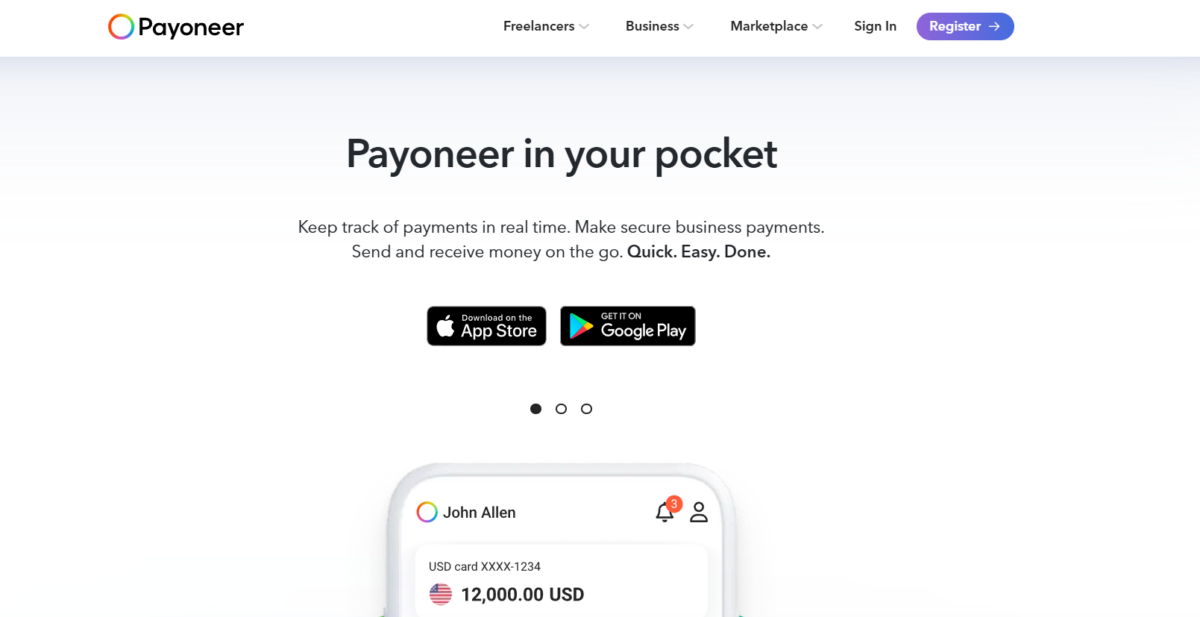
Payoneer completely dominates the massive global freelance and independent eCommerce marketplace ecosystem.
- Key Features: If you sell goods on Amazon or offer services on Upwork, Payoneer provides specific local receiving accounts designed specifically to catch your marketplace earnings in major currencies seamlessly.
- Fees: Receiving money from other Payoneer users is often free, but withdrawing funds to your local domestic bank account or converting currencies triggers percentage-based fees that can accumulate quickly over time.
- Best Use Case: It is the undisputed champion for independent freelancers, global digital nomads, and eCommerce sellers operating extensively on international marketplaces.
5. Airwallex
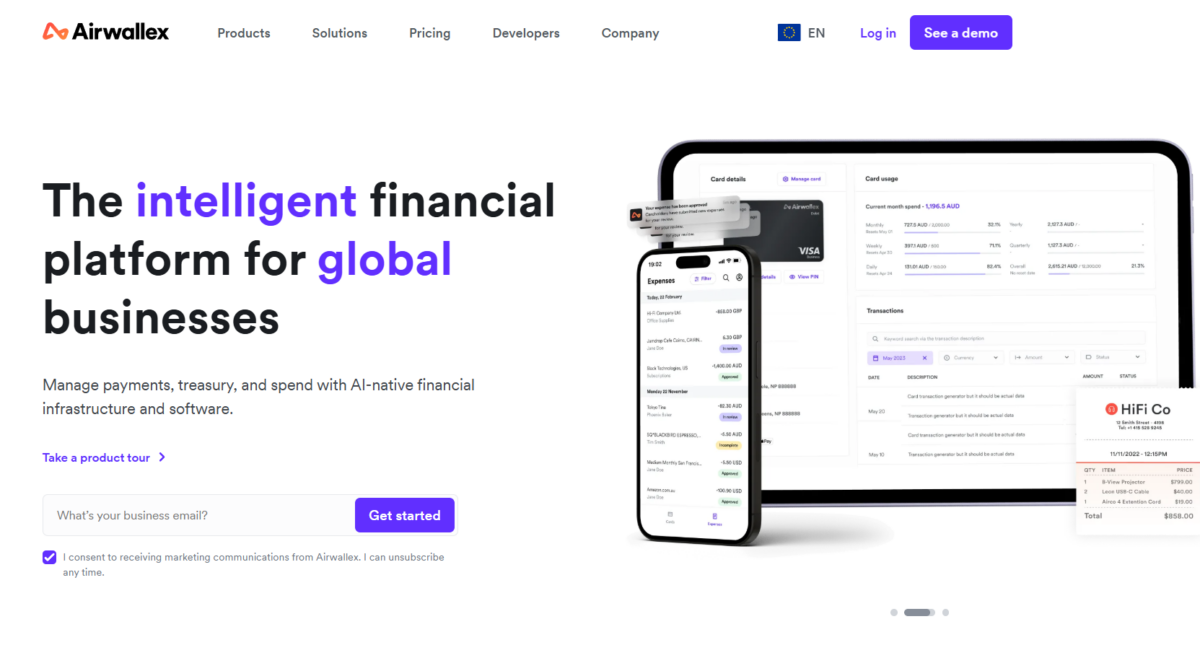
Airwallex builds its tools specifically for enterprise-level scalability and tech companies managing highly complex international treasury operations.
- Key Features: It provides incredibly robust API infrastructure, allowing developers to programmatically control high-speed global payouts, automate massive foreign exchange hedging, and issue corporate cards globally.
- Fees: Their pricing is heavily customized based on massive enterprise transaction volumes, often requiring direct negotiation with their sales team for large-scale operations.
- Best Use Case: It targets scaling tech companies and SaaS platforms that need to embed programmatic, complex multi-currency controls directly into their own software products.

Ready to upgrade your payment infrastructure?
Stop struggling with fragmented payment flows. Access dedicated IBANs, SEPA Instant, and seamless API integrations – all from a single, unified platform.
What Is a Multicurrency Account?
So, what is a multi currency account, exactly? In simple terms, a multi currency account is a unified financial dashboard that allows you to hold, receive, and send money in several different global currencies simultaneously.
Instead of opening a separate domestic bank account in the United States to hold dollars, another in the UK for pounds, and a third in Europe for euros, you manage everything from one single place. Think of it as a highly advanced digital wallet divided into specific currency compartments. Each compartment safely holds a different currency. You are completely in control. You only exchange the money between these compartments when you actually decide to, rather than letting a traditional bank force an expensive, automatic conversion the moment foreign funds arrive. This structure provides massive flexibility and protects the profit margins of global businesses.
How Does a Multicurrency Account Work?
How do you actually use this setup in your daily business operations? When you open a global currency account, the provider assigns you unique, local banking details for different regions. For example, you might receive a US routing number to collect dollars and a European IBAN to collect euros.
When a client in France pays your invoice, they send euros directly to your Euro IBAN. Because the currency matches the account compartment, the funds arrive instantly without triggering any currency conversion. You simply hold those euros in your balance. Later, if you need to pay a software contractor in the United States, you can manually convert those euros into dollars using your provider’s real-time exchange rate.
You execute the conversion exactly when the exchange rate is most favorable to your business. This workflow completely eliminates the automatic, hidden markup fees forced by traditional legacy banks. To understand how shifting exchange rates directly impact your business margins, Investopedia offers an overview of foreign exchange risk. Essentially, you control the exact flow and timing of your money.
Pros and Cons of a Multicurrency Account
Is a multi currency account the right financial move for your business operations? We always tell founders to review the exact benefits and limitations before overhauling their treasury operations.
Pros
- Massive Cost Savings: You avoid paying hidden foreign exchange markup fees on every single international transaction.
- Faster Global Payments: Holding local currencies allows you to use fast, local payment networks (like SEPA in Europe) rather than slow, expensive international SWIFT wires.
- Extreme Convenience: You manage all your global cash flow, accounting, and international vendor payouts directly from a single dashboard.
Cons
Accounting Complexity: Managing multiple active currency balances requires careful bookkeeping and modern, API-integrated accounting software to track your revenue accurately.
Maintenance Fees: Providers often charge monthly subscription or volume fees, meaning a truly free multi currency bank account is quite rare for scaling businesses.
How Does a Multicurrency Account Work?
How do you actually use this setup day-to-day? When you use a global currency account, the provider gives you local banking details for different countries. For example, you receive a US routing number for receiving dollars and a European IBAN for receiving euros.
When a client in France pays your invoice, they send euros directly to your Euro IBAN. The funds arrive instantly without any currency conversion. You simply hold those euros in your balance. Later, if you need to pay a software contractor in the United States, you convert those euros to dollars using the provider’s real-time exchange rate.
You execute the conversion exactly when the exchange rate is most favorable to your business. This completely eliminates the automatic, expensive conversions forced by traditional banks. To understand how shifting exchange rates directly impact your business, Investopedia offers a comprehensive overview on foreign exchange.
Pros and Cons of a Multicurrency Account
Is this the right financial move for your business operations? Reviewing the pros and cons helps clarify the decision.
Pros
- Massive Cost Savings: You avoid paying hidden foreign exchange markup fees on every international transaction.
- Faster Global Payments: Holding local currencies allows you to use fast, local payment networks (like SEPA in Europe) rather than slow international wires.
- Extreme Convenience: You manage all your global cash flow, accounting, and vendor payouts from a single dashboard.
Cons
- Maintenance Fees: Providers often charge monthly subscription fees, meaning a truly free multi currency bank account is rare for legitimate businesses.
- Accounting Complexity: Managing multiple currency balances requires careful bookkeeping and modern accounting software.
- Regulatory Limits: Providers often restrict certain currencies or limit transactions in high-risk countries based on international compliance laws.
FAQs
What are the benefits of having a multi-currency account?
The biggest benefit is saving capital. A multi currency account prevents automatic, expensive currency conversions. It also helps you get paid faster by offering foreign clients local, familiar payment details, making it easier for them to do business with you.
Are multi-currency accounts safe?
Yes. Regulated financial institutions and licensed Electronic Money Institutions (EMIs) use strict safeguarding protocols to protect your funds. They follow the exact same digital security regulations, encryption standards, and compliance rules as traditional banks.
What fees are associated with multicurrency accounts?
Common fees include a flat transaction fee for sending outgoing wire transfers, a small percentage markup on the actual currency exchange, and sometimes a monthly account maintenance fee. You must always read the provider’s specific pricing schedule before signing up.


