













 17 min read
  Last updated: 24 Sep 2026


The best contactless payment solutions enable businesses to accept fast, secure, and convenient payments through NFC-enabled cards, smartphones, and wearable devices. As consumer adoption of tap-to-pay transactions continues to grow worldwide, retailers, restaurants, SaaS platforms, and enterprise businesses increasingly need reliable systems that support seamless contactless payments across both physical and digital environments.
This guide compares 11 leading contactless payment companies and platforms in 2026, helping businesses identify which solution best fits their operational and technical requirements. From enterprise-grade payment infrastructure to simple POS-based systems for small businesses, the platforms covered here support a wide range of industries and payment models.
To ensure a meaningful comparison, each provider is evaluated based on hardware compatibility, NFC capability, mobile wallet support (such as Apple Pay and Google Pay), regulatory compliance, transaction fees, and scalability. Whether you’re upgrading an in-store payment system or building a contactless payment experience into your product, selecting the right provider is essential for delivering secure, frictionless customer transactions.
Quick answer (TL;DR)
The best contactless payment solution overall is ConnectPay, offering strong compliance coverage, scalable infrastructure, and seamless support for modern NFC and mobile wallet payments. Square is best for small retail businesses thanks to its simple POS ecosystem, while SumUp works well for mobile POS setups. Adyen stands out as the best enterprise contactless payment solution with global infrastructure and omnichannel capabilities. Stripe is ideal for mobile-first and developer-led businesses, and PayPal Zettle remains one of the best all-in-one payment apps for quickly accepting tap-to-pay transactions.
11 best contactless payment solutions
1. ConnectPay
Best for European businesses and fintech platforms needing a regulated, scalable contactless payment infrastructure.
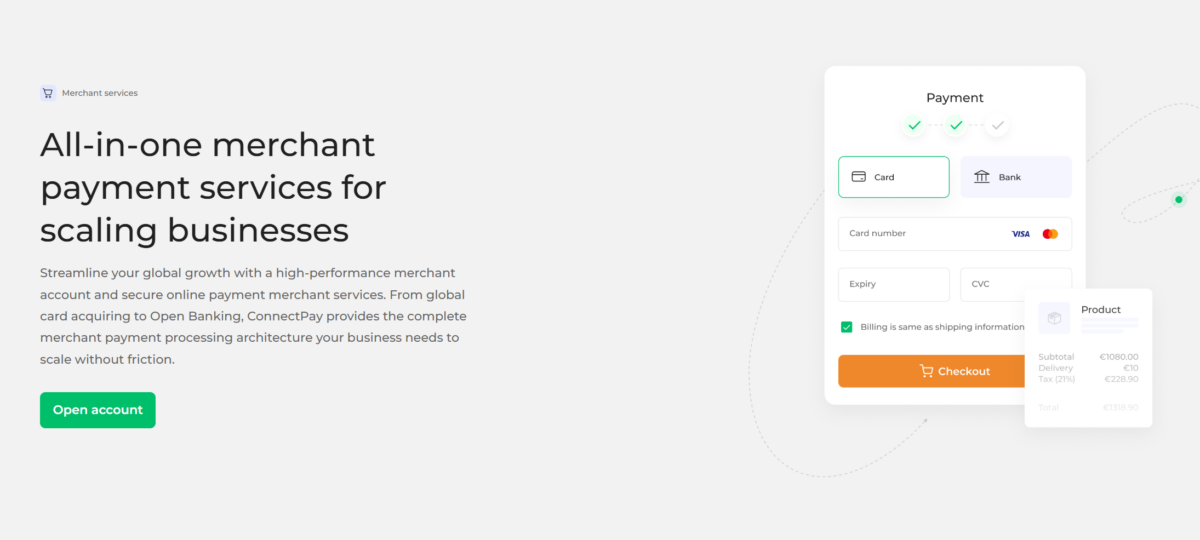
ConnectPay offers secure and scalable contactless payment solutions designed for businesses operating across the European Economic Area. As a licensed Electronic Money Institution (EMI), the company combines modern payment technology with strict regulatory oversight, making it a strong choice for businesses that require compliant and enterprise-ready payment infrastructure.
The platform enables merchants to accept contactless payments through NFC-enabled cards, smartphones, and wearable devices, supporting fast and convenient checkout experiences. ConnectPay integrates with major mobile wallets such as Apple Pay and Google Pay, allowing customers to complete transactions using tap-to-pay functionality in physical stores or service environments. This makes the system suitable for retail, hospitality, and other high-traffic businesses that rely on efficient payment flows.
Beyond payment acceptance, ConnectPay provides a comprehensive contactless payment system supported by integrated banking capabilities. Businesses benefit from dedicated IBAN accounts, SEPA transfers, and SWIFT connectivity, which simplify both domestic and international payment operations. These features help merchants manage funds, settlements, and cross-border transactions within a single financial infrastructure.
Security and compliance are central to ConnectPay’s contactless payment services. The platform includes robust AML monitoring, regulatory compliance frameworks, and fraud prevention systems, helping businesses accept contactless payments securely while meeting European regulatory standards.

2. Square (Block)
Best for small businesses needing a simple contactless POS setup.

Square, a payment platform developed by Block, is widely used by small businesses looking for an easy way to accept contactless payments in-store and on the go. Its simple setup and intuitive tools make it especially popular with retail shops, cafés, restaurants, and service-based businesses.
One of Square’s key advantages is its NFC-enabled card readers, which allow merchants to accept tap-to-pay transactions from contactless cards, smartphones, and wearable devices. Customers can pay quickly using Apple Pay, Google Pay, or other mobile wallets, improving checkout speed and customer convenience.
Square also offers a strong POS ecosystem designed for small businesses. Merchants can manage inventory, track sales, create digital receipts, and monitor performance through a unified dashboard. The platform also supports online payments and integrations with e-commerce tools, helping businesses manage both physical and digital sales channels.
Another reason many small businesses choose Square is its flat-rate pricing structure, which simplifies payment processing costs. Instead of complex interchange pricing models, Square typically charges a predictable transaction fee, making it easier for merchants to estimate expenses.
With accessible hardware, easy deployment, and reliable contactless payment functionality, Square remains a practical option for businesses seeking a simple, all-in-one POS and payment solution.
3. Stripe Terminal
Best for developers integrating contactless mobile payment solutions.

Stripe Terminal is designed for businesses and platforms that want to integrate contactless payment technology directly into their own products and checkout experiences. Unlike traditional POS providers, Stripe focuses heavily on developer flexibility, offering powerful APIs and SDKs that allow companies to build customized payment flows across physical and digital channels.
The platform supports NFC-enabled hardware, allowing businesses to accept tap-to-pay transactions from contactless debit and credit cards as well as mobile wallets like Apple Pay and Google Pay. This makes it possible to deploy fast, secure checkout experiences in retail environments, mobile setups, and service-based businesses.
A major advantage of Stripe Terminal is its omnichannel support. Businesses can manage online payments, mobile payments, and in-person transactions within the same Stripe infrastructure. This unified system helps maintain consistent reporting, customer data, and payment processing across different sales channels.
Stripe is especially popular among SaaS companies, marketplaces, and technology platforms because of its developer-friendly tools. Detailed documentation, APIs, and integration options allow engineering teams to embed contactless payments into their own products while maintaining full control over the payment flow and user experience.
4. Adyen POS
Best for enterprise omnichannel contactless payment systems.

Adyen is one of the leading contactless payment companies serving global enterprises that require reliable, scalable payment infrastructure. Its POS solution is designed for large retailers, hospitality chains, and international brands that need to manage payments across multiple markets and channels.
Adyen’s platform supports NFC-enabled terminals that allow businesses to accept contactless cards as well as mobile wallet payments such as Apple Pay and Google Pay. Customers can quickly complete transactions by tapping their card, phone, or wearable device, helping enterprises deliver fast and consistent checkout experiences across stores worldwide.
A key strength of Adyen is its unified commerce approach. Businesses can manage online, in-store, and mobile payments within a single platform, giving merchants a unified view of transactions, customer data, and reporting. This centralized infrastructure helps companies create consistent payment experiences while simplifying operations across regions and sales channels.
The platform also includes advanced fraud detection tools powered by machine learning, helping enterprises monitor transactions and reduce payment risks. Combined with structured enterprise onboarding processes, Adyen supports large organizations with the integrations, compliance requirements, and operational scale needed to implement secure contactless payment systems globally.
5, PayPal Zettle
Best for small retailers accepting contactless mobile payments.
PayPal Zettle is a simple and accessible solution for small businesses that want to start accepting in-person payments quickly. Combining a contactless payment app with compact hardware, Zettle allows retailers, cafés, and market vendors to accept modern payment methods without complex setup or infrastructure.
The system includes mobile card readers that support NFC technology, enabling merchants to accept tap-to-pay transactions from contactless debit and credit cards as well as mobile wallets like Apple Pay and Google Pay. Customers can complete payments by tapping their card or smartphone on the reader, creating a fast and convenient checkout experience.
One of Zettle’s biggest advantages is its easy setup. Businesses can connect the card reader to the Zettle mobile app, link their PayPal account, and begin processing payments within minutes. This simplicity makes it attractive for small retailers, pop-up shops, and mobile businesses that need a flexible payment solution.
Zettle also benefits from PayPal ecosystem integration, allowing merchants to manage funds, track sales, and transfer earnings directly through their PayPal account. With straightforward hardware, a mobile-first interface, and reliable contactless payment support, PayPal Zettle offers a practical solution for small businesses entering the world of digital payments.
6. Worldpay
Best for large merchants handling high-volume contactless transactions.
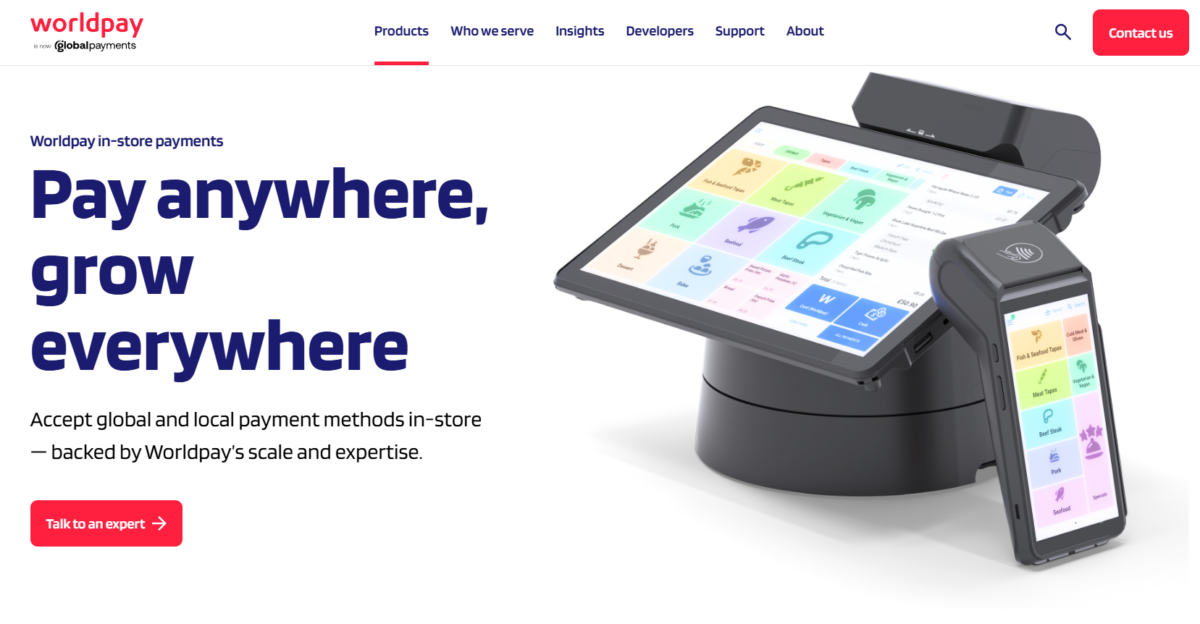
Worldpay is a well-established global payment processor that supports large retailers and enterprises managing high volumes of in-store and digital payments. The platform is widely used by contactless payment merchants that require stable infrastructure, international coverage, and reliable transaction processing.
Worldpay provides NFC-enabled payment terminals that allow businesses to accept tap-to-pay transactions from contactless debit and credit cards, as well as mobile wallets such as Apple Pay and Google Pay. These capabilities help merchants deliver faster checkout experiences while reducing friction at the point of sale.
A major advantage of Worldpay is its strong global acquiring network. Businesses operating in multiple countries can process payments in various currencies and connect with regional card schemes, making the platform suitable for international retailers, hospitality groups, and large service providers. Worldpay also offers enterprise-level contracts and customized payment solutions, allowing large organizations to tailor pricing structures, reporting tools, and integration capabilities based on transaction volume and operational needs.
With extensive industry experience, global payment coverage, and scalable infrastructure, Worldpay remains a reliable choice for enterprises seeking a secure and efficient way to process high-volume contactless payments.
7. Checkout.com
Best for high-growth businesses needing flexible contactless payment options.
Checkout.com is a modern payment processing platform designed for fast-growing digital businesses and global merchants. It provides a flexible infrastructure that allows companies to offer multiple contactless payment options across physical and online channels.
The platform supports NFC-enabled payment terminals and mobile wallet transactions, enabling customers to pay using contactless debit and credit cards, smartphones, and wearable devices. This allows merchants to deliver quick and convenient tap-to-pay experiences while maintaining consistent payment flows across different markets.
One of Checkout.com’s strengths is its advanced fraud prevention tools, which use machine learning and transaction monitoring to help businesses detect suspicious activity and reduce payment risk. These security features are particularly important for companies processing large volumes of transactions across multiple regions.
Checkout.com also provides strong global coverage, supporting payments in numerous currencies and connecting merchants with international card networks and local payment methods. This makes it a good fit for e-commerce companies, marketplaces, and technology platforms expanding into new markets.
With flexible APIs, scalable infrastructure, and reliable payment performance, Checkout.com offers businesses a modern platform for implementing secure and adaptable contactless payment capabilities.
8. SumUp
Best for micro-businesses and freelancers.

SumUp is a payment solution built for micro-businesses, freelancers, and independent merchants who need a simple and affordable way to accept contactless payments. Its focus on portability and ease of use makes it a popular choice for market vendors, small retailers, and service professionals.
The platform offers compact NFC card readers that enable businesses to accept tap-to-pay transactions from contactless debit and credit cards, as well as mobile wallets like Apple Pay and Google Pay. Customers can complete payments quickly by tapping their card or smartphone, creating a smooth and efficient checkout experience.
SumUp follows a mobile-first approach, allowing merchants to process payments through a smartphone or tablet using the SumUp app. The app provides essential tools such as transaction tracking, digital receipts, and basic sales reporting, helping businesses manage payments without complex POS systems. Another advantage is simple pricing, typically based on a flat transaction fee without monthly subscription costs. This transparent structure helps freelancers and small businesses better predict processing expenses.
With portable hardware, straightforward pricing, and easy setup, SumUp provides a practical contactless payment solution for small merchants and independent professionals.
9. Clover
Best for retail and hospitality POS with contactless integration.

Clover is a versatile platform that combines POS functionality with a fully integrated contactless payment system. It is widely used by retail stores, restaurants, cafés, and service businesses that need both payment processing and operational tools in one platform.
A key advantage of Clover is its broad hardware ecosystem, which includes countertop terminals, handheld devices, mobile card readers, and self-service kiosks. These devices support NFC technology, allowing businesses to accept tap-to-pay transactions from contactless cards as well as mobile wallets like Apple Pay and Google Pay.
Clover also provides access to an extensive app marketplace. Merchants can add applications for inventory tracking, customer loyalty programs, employee scheduling, and advanced reporting. This flexibility allows businesses to tailor the POS environment to match their daily operations. In addition, Clover supports merchant services integration, combining payment processing with tools for analytics, customer management, and transaction monitoring.
With customizable software, modern hardware, and built-in contactless capabilities, Clover offers a reliable solution for retail and hospitality businesses that want a POS system with integrated payment functionality.
10. Apple Pay (Merchant Integration)
Best for businesses prioritizing mobile wallet contactless payments.

Apple Pay is one of the most widely adopted contactless payment methods, allowing customers to pay using their iPhone, Apple Watch, or other Apple devices. For merchants, Apple Pay can be integrated into compatible POS systems to enable fast and secure tap-to-pay transactions.
The system uses NFC-based technology, allowing customers to complete payments by simply holding their device near a contactless terminal. Transactions are authenticated through biometric security features such as Face ID or Touch ID, providing both convenience and strong protection against unauthorized payments.
To accept Apple Pay in physical locations, businesses need a compatible POS terminal that supports NFC transactions. Many modern payment providers and POS platforms already include this functionality, making it relatively easy for merchants to enable Apple Pay alongside other contactless cards and mobile wallets.
Apple Pay has achieved strong consumer adoption, particularly among smartphone users who prefer mobile wallet payments over physical cards. As mobile payments continue to grow, many businesses integrate Apple Pay to provide faster checkout experiences and support modern digital payment preferences.
11. Google Pay (Merchant Integration)
Best for Android-focused contactless mobile payment acceptance.
Google Pay represents another major contactless mobile payment solution, giving businesses a way to accept tap-to-pay transactions from Android smartphones and wearable devices. As Android remains the most widely used mobile operating system globally, supporting Google Pay can significantly expand mobile wallet payment coverage.
Similar to other wallet-based payments, Google Pay relies on NFC-enabled technology that allows customers to complete transactions by tapping their device on a compatible payment terminal. The payment is authorized directly on the device using security tools such as fingerprint recognition, facial authentication, or device passcodes.
To enable Google Pay in-store, businesses must use POS systems that support NFC contactless payments. Many modern payment terminals already include this functionality, making it straightforward for merchants to add Google Pay alongside contactless cards and other digital wallets.
Adoption of Google Pay continues to grow across international markets, especially in regions with strong Android device usage. For merchants, supporting Google Pay helps ensure customers can choose from multiple contactless payment options when completing purchases.

Ready to upgrade your payment infrastructure?
Stop struggling with fragmented payment flows. Access dedicated IBANs, SEPA Instant, and seamless API integrations – all from a single, unified platform.
How to choose the best contactless payment solution
Choosing among the best contactless payment options isn’t just about accepting tap-to-pay cards – it’s about finding a system that fits how your business actually runs. The right solution should make payments feel effortless for customers while keeping operations smooth behind the scenes.
Start with hardware compatibility. Most contactless payment solutions rely on NFC-enabled readers or POS terminals that let customers tap cards, smartphones, or smartwatches. If your customers already pay with Apple Pay or Google Pay, make sure your system supports those wallets – because convenience at checkout often determines whether a purchase happens or not.
Next, look at the pricing model. Small retail shops or cafés often prefer predictable flat fees, while larger businesses and enterprise merchants might benefit from negotiated or volume-based pricing. Choosing the right pricing structure can make a noticeable difference in long-term payment costs.
Compliance also matters. Reliable contactless payment services should include strong regulatory coverage, AML monitoring, and secure data handling – especially important for businesses operating internationally.
Think about how payments connect to the rest of your business. Restaurants and hospitality venues may need POS-focused systems, while hybrid retailers should prioritize omnichannel integration that links in-store payments with eCommerce platforms.
Finally, consider scalability and fraud protection. Whether you’re a growing SaaS platform or an established enterprise, a good payment system should grow with you – handling higher volumes, new markets, and evolving customer expectations without missing a beat.
Best contactless payment services: comparison
| Solution | Best for | Region | Hardware required | Wallet support | Scalability |
|---|---|---|---|---|---|
| ConnectPay | European regulated merchants & fintechs | Europe | NFC POS terminals | Apple Pay, Google Pay | High |
| Square | Small retail & cafés | US, UK | Square NFC reader | Apple Pay, Google Pay | Medium |
| Stripe Terminal | Developer-led integrations | Global | Stripe NFC readers | Apple Pay, Google Pay | High |
| Adyen POS | Enterprise omnichannel commerce | Global | Adyen NFC terminals | Apple Pay, Google Pay | Enterprise |
| PayPal Zettle | Small retailers & mobile sellers | US, Europe | Zettle card reader | Apple Pay, Google Pay | Medium |
| Worldpay | High-volume merchants | Global | Enterprise POS terminals | Apple Pay, Google Pay | Enterprise |
| Checkout.com | Fast-growing digital businesses | Global | NFC-compatible terminals | Apple Pay, Google Pay | High |
| SumUp | Freelancers & micro-businesses | Europe | SumUp NFC reader | Apple Pay, Google Pay | Low–Medium |
| Clover | Retail & hospitality POS | US, Europe | Clover POS devices | Apple Pay, Google Pay | Medium |
| Apple Pay | iOS wallet payments | Global | NFC POS required | Apple Pay | High |
| Google Pay | Android wallet payments | Global | NFC POS required | Google Pay | High |
Make contactless payments part of your growth strategy
Choosing among the best contactless payment solutions isn’t just about installing a new card reader – it’s about preparing your business for how people actually prefer to pay today. Customers increasingly expect checkout to be quick, seamless, and mobile-friendly. A smooth tap can often make the difference between a completed purchase and an abandoned one.
The right solution should fit your business model and growth plans. A neighborhood café may prioritize simplicity and speed, while a growing SaaS platform or enterprise retailer may need deeper integrations, cross-border payment solutions, and room to scale. The best systems grow with your business rather than forcing you to upgrade every few years.
Security and compliance matter just as much as convenience. Strong fraud protection, regulatory oversight, and reliable payment infrastructure help businesses accept contactless transactions with confidence while protecting customer data.
And with mobile wallets becoming part of everyday life, supporting contactless payments is no longer a “nice-to-have” – it’s becoming standard. The goal isn’t just faster payments today, but a payment setup ready for tomorrow’s growth. To explore modern payment infrastructure built for scaling businesses, visit ConnectPay.
FAQs: contactless payment solutions
Which systems provide real-time contactless transaction tracking?
ConnectPay and other modern payment platforms provide real-time transaction dashboards showing contactless payments as they happen, with reporting broken down by device, location, or time period. Square, SumUp, and Adyen offer similar real-time tracking, particularly useful for multi-location businesses needing centralized views.
What are the top-rated solutions for quick, touch-free transactions?
Apple Pay, Google Pay, and standard NFC-enabled contactless cards remain the fastest touch-free options, typically completing a transaction in under a second. For merchants, ConnectPay, Square, and SumUp all support accepting these fast, tap-to-pay transactions across in-store and mobile card readers.
Which platforms support multi-device contactless payment acceptance?
ConnectPay, Square, and SumUp all support accepting contactless payments across multiple device types – countertop terminals, mobile card readers, and tablet-based POS systems – from a single merchant account. Adyen offers similar multi-device support at a more enterprise scale, unifying in-store and online payment data.
Which platforms offer secure and encrypted contactless processing?
ConnectPay, Square, Adyen, and SumUp all use end-to-end encryption and tokenization by default for contactless processing, since this is required for PCI DSS compliance and NFC payment standards. The differences between providers usually come down to additional fraud tooling and compliance certifications rather than encryption itself.
Which systems offer touchless payment workflows?
Contactless card readers and mobile wallets (Apple Pay, Google Pay) enable fully touchless in-store workflows, and providers like ConnectPay, Square, and SumUp supply the hardware and software to accept them. For self-checkout or unattended settings, purpose-built kiosks from companies like Ingenico and Verifone also support touchless workflows.
What are the best platforms for accepting payments on-the-go?
SumUp and Square are the most widely used platforms for mobile, on-the-go payment acceptance, offering compact card readers that pair with a phone or tablet. ConnectPay, Stripe Terminal, and Adyen also support mobile acceptance, generally favored by businesses that need it alongside a broader online payment setup.


