


 15 min read
 Last updated: 27 Oct 2026


Payment fraud detection solutions spot and stop fraudulent transactions before they cost you money. The best ones do more than block payments. They protect your revenue, keep chargebacks down and make sure good customers get through checkout without friction.
That last point matters more than most teams expect. In our work at ConnectPay, we see businesses lose as much to wrongly declined customers as to actual fraud. A tool that blocks everything suspicious also blocks a lot of real buyers.
This guide compares 8 leading payment fraud detection solutions, from machine learning scoring platforms to chargeback guarantee models. We explain how payment fraud detection works, which features matter, and how to measure results after launch. We also cover how our own fraud prevention fits alongside dedicated fraud detection software. By the end, you’ll know which type of tool fits your volume, risk tolerance and team.
What Is Payment Fraud Detection?
Payment fraud detection finds and blocks fraudulent transactions before or right after they happen. Modern fraud detection solutions combine machine learning with rules-based checks. Machine learning spots new patterns. Rules handle known threats.
Most payment fraud falls into five types:
- Card-not-present (CNP) fraud: Someone uses stolen card details online or by phone. CNP fraud accounts for most card fraud losses globally.
- Account takeover fraud: A fraudster logs in with stolen credentials and spends from a real customer’s account.
- Friendly fraud: A real customer buys something, then disputes the charge with their bank.
- Gift card fraud: Fraudsters buy gift cards with stolen cards, then resell or drain them fast.
- Card testing fraud: Bots run small payments to check which stolen card numbers still work.
Some fraud detection solutions also use graph analysis. It maps links between accounts, devices, emails and cards. Ten “different” customers who share one device and two cards suddenly look like one fraud ring.
If you run an online store, payment fraud sits right next to your checkout. Our guide to ecommerce payment processing covers that side of the stack.
How Payment Fraud Detection Works
Good fraud detection software doesn’t rely on one signal. It layers several checks and weighs them together.
- Real-time transaction monitoring. Modern fraud detection software can analyze a transaction in under 100 milliseconds.
- Device fingerprinting. The tool identifies the device behind each payment, even if the user clears cookies or changes accounts.
- Velocity checks. These flag actions that happen too fast to be human. Twenty checkout attempts in a minute from one IP address is a bot, not a shopper.
- Behavioral biometrics and analytics. The system learns how real users type, scroll and move through a page.
- Tokenization. Tokens replace sensitive card data, so a breach exposes nothing useful.
- 3D Secure 2. This protocol adds a risk-based bank check for card-not-present payments. Only risky payments trigger a challenge, such as a code in their banking app.
Here’s how the layers work together. A new customer pays €800 for electronics at 3 a.m. Their device appears on three other accounts, and the billing address doesn’t match the card country. The score comes back high, and the system holds the order.
But a high score shouldn’t mean an automatic decline. Ambiguous cases need human review. Fraud detection only works when it stops fraud without turning away legitimate customers.

Ready to upgrade your payment infrastructure?
Stop struggling with fragmented payment flows. Access dedicated IBANs, SEPA Instant, and seamless API integrations – all from a single, unified platform.
Best Payment Fraud Detection Solutions: Quick Overview
Here are our picks by use case:
- Best for high-volume marketplaces: Sift
- Best for instant identity-based decisions: Forter
- Best for hands-off chargeback guarantee: Riskified
- Best for guaranteed commerce protection: Signifyd
- Best for PSP-bundled fraud coverage: Kount
- Best for banks and payment processors: Feedzai
- Best for transparent SMB pricing: SEON
- Best for AI plus human analyst review: ClearSale
8 Best Payment Fraud Detection Solutions
This list covers dedicated fraud detection vendors. We cover ConnectPay separately later, because our fraud monitoring sits inside a broader payments platform rather than competing as a standalone tool. Each vendor below takes a different approach, so we’ve focused on who each one suits best.
1. Sift
Best for: Marketplaces and platforms with high transaction volume wanting a flexible, configurable ML scoring platform.

Sift uses machine learning and behavioral analytics to detect fraud in real time. It covers more than payments. It also monitors account sign-ups, logins and other digital interactions, such as fake listings or spam messages on a marketplace.
Sift returns a risk score for each event. Your team decides what to do with it. You can auto-approve low scores, block high ones and send the middle band to manual review. You also set your own rules and adjust thresholds as you learn.
That flexibility is why many teams see Sift as the best fraud detection software when they outgrow rules-based tools. A marketplace with a few hundred hand-written rules often swaps them for Sift as fraud patterns get too complex to track by hand.
There’s one condition. Sift’s models work best with high transaction volume. The more data you feed them, the sharper the scoring gets. Smaller businesses may not see the same accuracy early on.
2. Forter
Best for: Enterprises wanting instant, identity-based approve/decline decisions at high volume.

Forter takes a different approach from scoring platforms. It doesn’t hand you a score to interpret. It gives you a decision: approve or decline, in real time.
Its trust platform builds a view of each customer’s identity across Forter’s merchant network. When a shopper checks out, Forter asks one question: is this the person they claim to be? It answers in the moment, using signals from that customer’s past behavior across many merchants.
For enterprise merchants, this cuts manual work. A global fashion retailer processing thousands of orders an hour can’t review borderline cases by hand. Forter’s model is built for that scale.
That’s why Forter often appears among the top fraud detection software for large ecommerce brands. It suits merchants that value speed and automation over manual control. If your risk team wants to tune every rule itself, a scoring platform like Sift may fit better.
3. Riskified
Best for: Large online retailers wanting a hands-off fraud solution backed by a chargeback guarantee.

Riskified offers ecommerce fraud protection with a chargeback guarantee. If Riskified approves an order and it later turns out to be fraud, Riskified covers the cost.
Its machine learning models focus on approving more orders, not just blocking bad ones. Many retailers decline good orders out of caution. Riskified’s pitch is that it can safely approve some of them, which lifts revenue.
Here’s how it plays out. A luxury retailer used to decline any order with a mismatched billing and shipping address. That rule blocked fraud, but it also blocked customers sending gifts. With a guarantee in place, the retailer can approve those orders and let Riskified carry the risk.
The trade-off is cost. Guarantee models shift financial risk to the vendor, so they usually cost more per transaction than scoring-only fraud detection tools. For high-margin retailers with heavy chargeback exposure, that premium often pays off.
4. Signifyd
Best for: Mid-market and enterprise ecommerce merchants wanting guaranteed protection plus coverage for item-not-received and policy abuse.
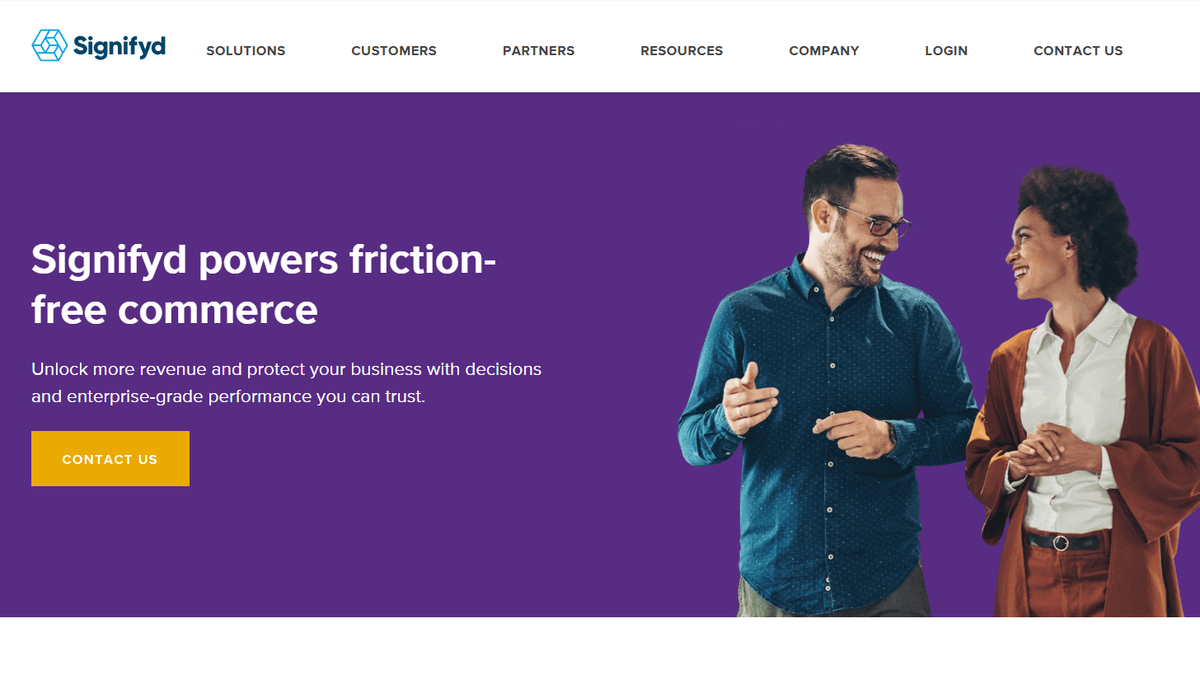
Signifyd runs a Commerce Protection Platform. It combines payment fraud detection with a guaranteed liability shift on approved orders. If Signifyd approves an order that later becomes a fraud chargeback, Signifyd pays.
What sets it apart is coverage beyond fraud. Signifyd also addresses non-fraud chargebacks, such as item-not-received claims. Some competitors don’t cover these at all. It also helps merchants spot policy abuse, like customers who claim refunds again and again.
Think of an electronics store that loses money to “package never arrived” claims every month. Fraud-only tools don’t help, because the customer is real. Signifyd covers that gap.
For merchants who face several types of chargebacks, Signifyd is a strong contender for the best fraud prevention solution. It suits mid-market and enterprise ecommerce businesses that want one partner for fraud and abuse.
5. Kount
Best for: Businesses already using a PSP that bundles Kount, wanting broad identity data from its Equifax backing.
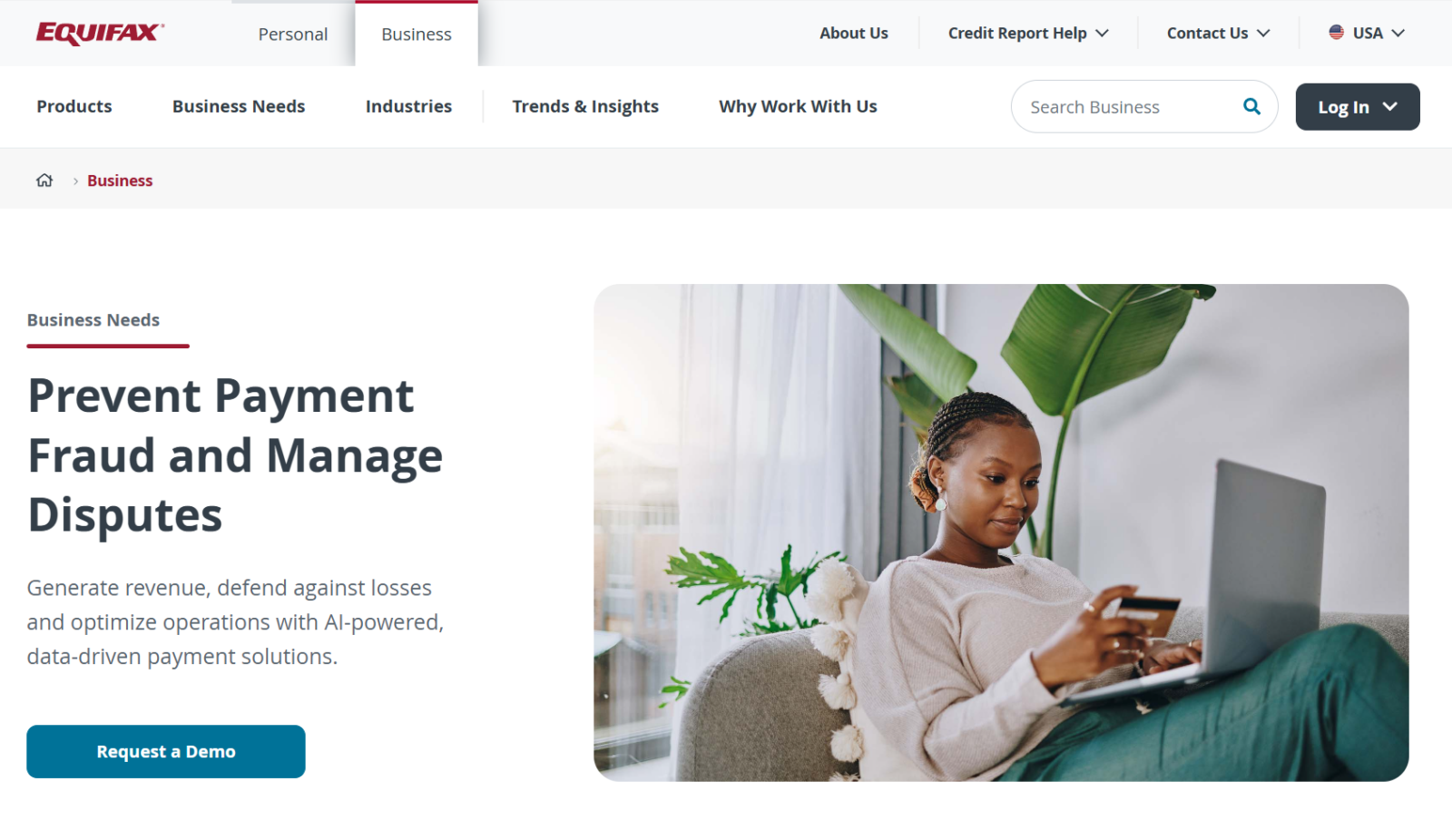
You may already have Kount without knowing it. Many payment service providers bundle Kount into their offering, so a number of merchants can switch it on without a separate purchase.
Kount is an Equifax company. It combines machine learning, device fingerprinting and consortium data to deliver precise fraud prevention. Equifax ownership gives it access to broad identity data, which helps it judge whether a customer is who they claim to be.
Its tools reach beyond ecommerce checkout. Financial institutions also use Kount’s identity and device signals, which puts it among the banking fraud detection tools some lenders and fintechs rely on.
Before you shop for a new vendor, check your current PSP contract. If Kount is already in it, start there and test how far it gets you.
6. Feedzai
Best for: Banks and payment processors needing real-time fraud detection across both payments and banking channels.

Feedzai builds fraud detection for financial institutions, not just online stores. Its AI platform detects and prevents financial fraud in real time across payments and banking channels.
That broader scope is the key difference. Ecommerce tools focus on the checkout. Feedzai looks at the whole customer relationship, including account openings, transfers, card payments and logins.
Here’s a typical use case. A bank customer receives a call from someone posing as the bank’s fraud team. They’re told to move their savings to a “safe” account. Feedzai can flag that transfer as unusual for this customer, even though the customer authorizes it themselves.
Feedzai also supports fraud detection automation at scale, so analyst teams spend time on real threats instead of routine alerts. It suits banks and payment infrastructure providers rather than pure ecommerce merchants.
7. SEON
Best for: SMBs wanting transparent published pricing and fast setup.
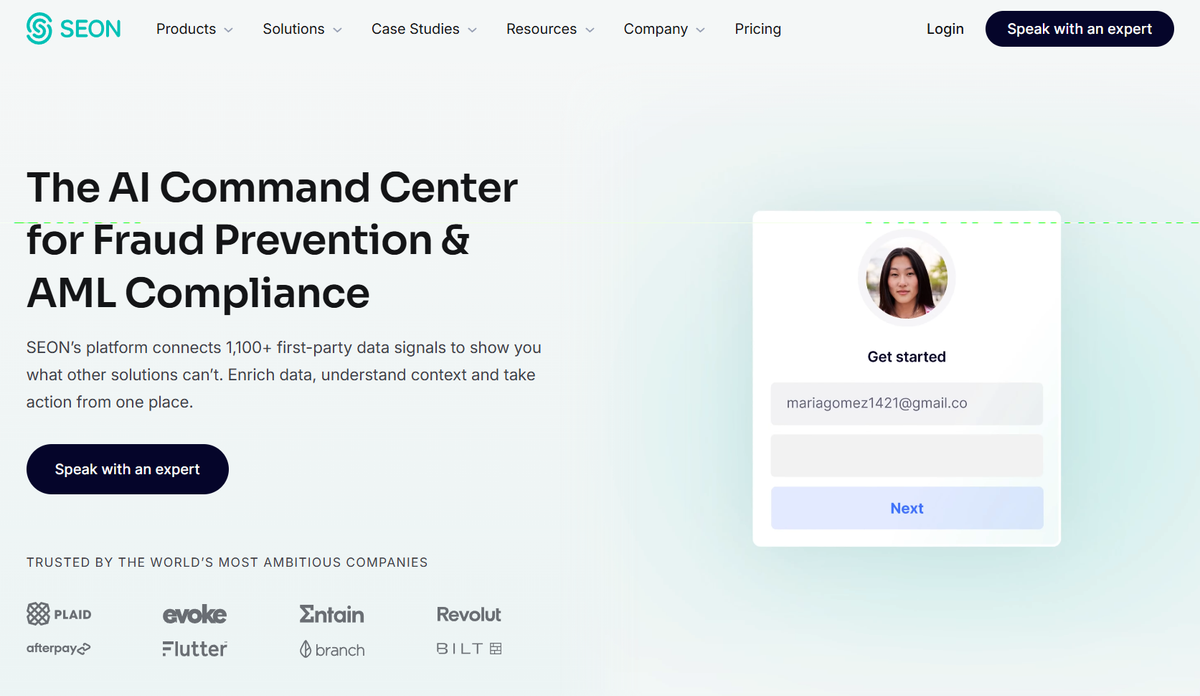
SEON stands out for transparency. It publishes its pricing, which few fraud vendors do. Integration typically takes around two weeks.
Its approach centers on digital footprint analysis. SEON checks a customer’s email address, phone number and device data in real time. It looks at whether the email links to social media profiles, how old the phone number is and whether the device looks suspicious.
A fake account often has a brand-new email with no online presence and a disposable phone number. A real customer usually has years of digital history. SEON uses those gaps to score risk.
That makes SEON one of the more accessible fraud prevention software solutions for smaller teams. A growing online store can test it without a long sales cycle or a large upfront commitment.
8. ClearSale
Best for: Businesses wanting AI decisioning combined with human analyst review, especially for international sales.

ClearSale mixes technology with people. It combines statistical and AI models with a large team of human fraud analysts who manually review orders.
Most fraud detection tools aim to automate as much as possible. ClearSale takes a hybrid approach on purpose. Its models handle clear cases. Analysts step in for orders that need human judgment.
That works well for international sales. ClearSale covers more than 160 countries. A merchant selling to a new market may lack the data to tell normal buyers from fraudsters. A human analyst can spot context that a model trained on other markets might miss.
Picture a US retailer that starts shipping to Brazil and Southeast Asia. Its existing rules flag most of those orders as risky. ClearSale’s analysts can approve the legitimate ones and catch the real fraud.
ClearSale suits businesses selling internationally who want AI plus human review rather than full automation.
Payment Fraud Detection Solutions: Comparison
Here are all 8 vendors side by side. Your merchant setup also shapes which tools you can plug in, so see our list of merchant service providers if you’re still choosing one.
| Provider | Best For | Model Type | Best Fit Business Size |
|---|---|---|---|
| Sift | High-volume marketplaces | Scoring | Mid-market to enterprise |
| Forter | Instant identity-based decisions | Scoring with guarantee option | Enterprise |
| Riskified | Hands-off chargeback guarantee | Guarantee | Enterprise |
| Signifyd | Guaranteed commerce protection | Guarantee | Mid-market to enterprise |
| Kount | PSP-bundled coverage | Scoring | SMB to enterprise |
| Feedzai | Banks and payment processors | Scoring | Enterprise |
| SEON | Transparent SMB pricing | Scoring | SMB to mid-market |
| ClearSale | AI plus human review | Hybrid | SMB to enterprise |
Key Features of Payment Fraud Detection Solutions
Once you’ve seen the vendors, it helps to sort them into categories. The key features of payment fraud detection solutions depend on which category a tool belongs to. The market splits into three:
- Scoring platforms return an approve or block decision, or a risk score you act on. Sift and SEON work this way.
- Guarantee models shift chargeback liability to the vendor. Riskified and Signifyd lead here.
- Signal-layer tools collect device and browser evidence and feed it into a scoring platform.
Most businesses need tools from at least two of these categories, not just one. A common setup pairs a signal-layer tool with a scoring platform. Another adds a guarantee for high-value orders only.
Beyond the category, check these criteria:
- PCI DSS compliance for any tool that touches card data
- Integration capabilities with your current payment stack, including your PSP, checkout and order system
- Multi-factor authentication support for logins and high-risk actions
- Customizable risk rules, so your team can respond to new fraud patterns without waiting on the vendor
Integration deserves extra attention. A strong tool that can’t see your payment data won’t help. Check how each vendor connects to your merchant services setup before you sign.
How ConnectPay Approaches Fraud Prevention
We take a different approach from the vendors above. At ConnectPay, we don’t sell fraud detection as a standalone product. We build fraud detection and transaction monitoring into our payments and account infrastructure.
When you use our accounts, cards or payments, payment fraud prevention runs in the background. We monitor transactions for unusual activity as part of our embedded compliance setup. You don’t add a separate vendor to get baseline protection.
This suits businesses that want fraud monitoring included with their banking and payments stack. A marketplace paying out sellers, for example, gets transaction monitoring on every payout without a separate contract.
We don’t replace the specialist tools on this list. If you run high-volume ecommerce checkout, you may still want Sift, Signifyd or another dedicated vendor for deeper, checkout-specific decisions. Our monitoring gives you a baseline, and you can layer a specialist tool on top.
Measuring Fraud Strategy Effectiveness
Choosing a vendor is the start, not the finish. A good fraud detection solutions comparison doesn’t end at signing. It continues as you measure results over time.
- Define success metrics upfront. Decide what “working” means before launch. Lower fraud losses? Fewer false declines? Both?
- Track fraud rate and chargeback rate. These two KPIs show whether fraud gets through and what it costs you. Card schemes also monitor chargeback rates, and high rates can trigger penalties.
- Benchmark against industry standards. Compare your rates with businesses in your sector and region. A rate that looks fine in isolation may sit well above your peers.
- Test and adjust risk rules. Run experiments. Loosen one rule for a small share of traffic and watch what happens to fraud and approval rates.
- Measure mean time to detection. How long does a new fraud pattern run before you catch it? Shorter is better.
Treat this as an ongoing process. Fraudsters change tactics, so your setup has to keep up.
How to Choose the Best Fraud Detection Solution
The best payment fraud detection solutions for your business depend on four factors.
- Transaction volume. Scoring platforms need volume to train their models.
- Risk tolerance. Do you want to manage fraud decisions yourself, or pay a vendor to carry the risk? A chargeback guarantee costs more, but it turns an unpredictable loss into a fixed fee.
- Geographic coverage. If you sell internationally, look for the best global payment solutions for fraud detection in your target markets. A tool trained mostly on US data may misjudge buyers elsewhere.
- Manual review capacity. How many people can review flagged orders? A small team needs more automation. A larger risk team can work with scores and rules.
Here’s how we’d match readers to tools:
- High-volume marketplaces and platforms: Sift
- Enterprises wanting to outsource risk entirely: Riskified or Signifyd
- Banks and payment processors: Feedzai
- SMBs wanting transparent pricing: SEON
- International sellers wanting human review: ClearSale
- Businesses wanting baseline monitoring built into their payments stack: ConnectPay
If you’re still setting up payments, start with our guide on how to accept payments online, then add fraud tools on top.
Stop Fraud Without Blocking Good Customers
Fraud prevention is about balance, not maximum blocking. The best payment fraud detection solution for you depends on your transaction volume, your risk tolerance and how much liability you want to hand over versus manage yourself.
Keep false positives in view. Every legitimate customer you decline costs you that sale, and often the customer’s next ten. A tool that cuts fraud losses but raises false declines may leave you worse off.
If you already build on our payments infrastructure, our embedded fraud monitoring gives you a solid baseline from day one. As your volume grows, you can add a dedicated tool from this list for deeper checkout decisions. That way, protection scales with your business instead of running ahead of it.
To see how fraud monitoring fits with accounts, cards and payments, visit ConnectPay.


